A Rusty Line Item and the Case of the Misfiled Combs
/A wool-comb entry in the Library of Congress inventory turned out to be something else entirely. What it took to catch the error says more about archives than the object itself.
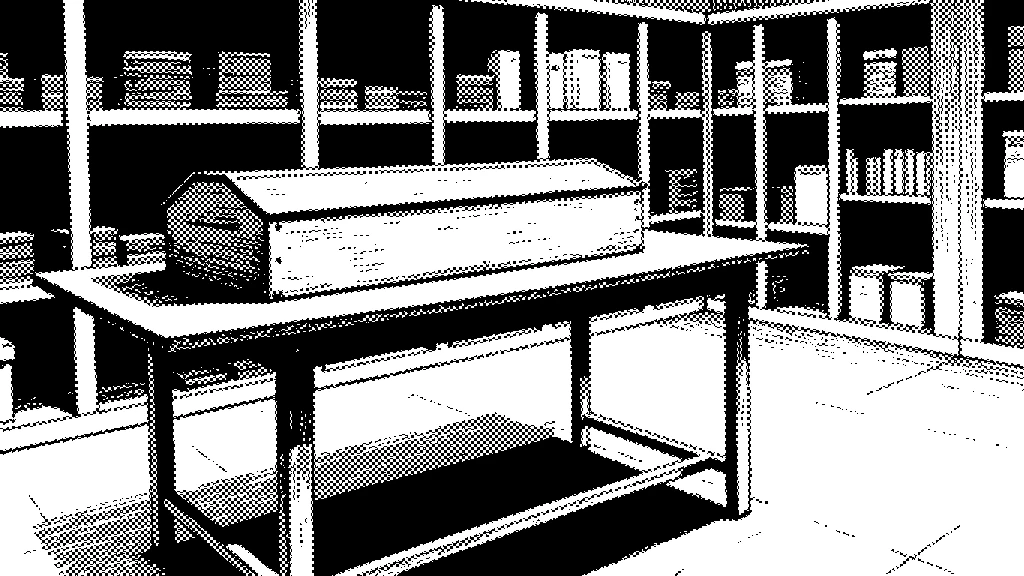
Somewhere in the gifts-and-artifacts spreadsheet of the American Folklife Center sits a line that reads, in full: “interlocked hatchels or wool combs. Rusty metal, dirty.” Nobody had flagged it as wrong. Nobody had flagged it at all. It just sat there being a description, doing the job descriptions do, which is mostly nothing, until somebody who actually works fiber went down to the archive deck and pulled the box.
That somebody is AFC Folklife Specialist Meg Nicholas, and what she found under the rust was not a wool comb. It was a flax hatchel, a tool for combing the woody chaff out of flax stems until what’s left is spinnable linen fiber, and the record had been calling it the wrong thing since whenever somebody first typed it in.
TL;DR: A tool in the Library of Congress’s American Folklife Center archive was cataloged as “interlocked hatchels or wool combs,” but a closer look by a textile-artist archivist revealed it’s almost certainly a flax hatchel, a distinct tool used to process flax into linen fiber, documented in the Center’s Stahlstown Flax Scutching Festival collection. The correction hinged on physical detail an outside reader would never think to check: bolt holes, tine spacing, fiber length. Nobody has figured out how the tool ended up in the collection in the first place.
How do you catch an error nobody was looking for?
Nothing about that line item screamed problem. It had a description, however vague, and a location, and a status. On paper, the record was doing its job.
I filed request slips for twenty-two years. Every call the board could not fill, kept in a drawer management called trash because it was a record of failure. It was the only honest demand data in the building. This correction came out of that same drawer. Not the catalog, which was doing its job. The gap between what the catalog said and what a pair of hands already knew. The catch happened because one specific person, with one specific body of hands-on knowledge, looked at one specific object and felt the description not quite fit her hands. That’s a bad thing to depend on, honestly. An archive that only gets corrected when the right expert happens to wander past the right shelf is an archive with a lot of quiet wrong entries nobody’s wandered past yet.
Nicholas is upfront about this too. She still doesn’t know how the hatchels got into the Center’s holdings, since the Center mostly collects audio and video, not artifacts. The correction fixes what the thing is. It doesn’t fix why it’s there, and she says as much rather than papering over the gap with a guess.
A hatchel and a wool comb are separated by measurements
This is where the piece gets specific, because the answer is measurements. Wool hatchels run in a single line, one or two rows of tines, made for combing fleece with a staple length of maybe three to six inches. Flax fibers run twelve to twenty-four inches, so a flax hatchel has to be built wider and, crucially, bolted to a working surface instead of held. You can see the bolt holes if you know to look for them. Try dragging a six-inch staple of wool through a rig built for two-foot flax and you’ll find out how sharp those tines really are the hard way.
The process behind the object matters just as much as the object. Flax gets pulled whole from the ground, root and all, because the usable fiber runs the plant’s full length. Then it’s retted, either laid flat in a field to draw moisture from dew over two to three weeks, or bundled into water for a faster and riskier soak. Dried, broken over wooden blades, beaten on a scutching board to strip the short fibers out as tow, and only then does it go to the hatchels, coarse first, fine last, until what’s left is a strand smooth enough to spin.
What does “provenance unknown” actually cost an archive?
It costs the story, mostly. An object without a paper trail can still be identified correctly, which is what happened here, but identification and provenance are two different jobs, and only one of them got finished. The record now says the right thing about what the hatchels are. It still can’t say anything about how they crossed from wherever they were made into a Library of Congress storage box, and that second silence is the more expensive one, because it’s the part nobody can go back and fix later. Physical evidence sits still and waits to be reread. A missing donor record, a missing acquisition note, that gap just gets wider with time, not narrower.
I have that hole in my own stacks. Two reels, 1974, no donor line, nothing in the accession book for that month. I know exactly what is on them. I will never know how they got here, and the not-knowing has cost me more than any mislabel ever has.
Which is the quieter point sitting under the whole piece. A mislabeled item can be corrected decades on, because the object itself is still there to argue with the label. A lost provenance chain can’t be reconstructed the same way. You either wrote it down when the object came in, or you didn’t, and no amount of expertise pulled off a shelf later fixes that particular hole. The hatchels got lucky. Somebody who knew fiber happened to open that box. Not every misfiled object gets that visit.
Frequently asked questions
What is flax retting, exactly?
Retting is the step where cut or pulled flax stalks are exposed to moisture, either laid in a field to catch dew over roughly two to three weeks, or submerged in water for a faster but less controlled version, so that bacteria break down the pectin binding the fiber to the woody core of the plant. Retted correctly, the fiber pulls free from the stem by hand. Retted too long or unevenly, the fiber degrades along with the chaff you’re trying to lose.
Where can you actually see this collection?
The Stahlstown Flax Scutching Festival collection lives in the American Folklife Center’s holdings under catalog number AFC 2007/040, and includes photographs and a short 2006 documentary covering the harvest, retting, breaking, scutching, and heckling stages in sequence. Nicholas notes it’s viewable by appointment in the Center’s reading room, alongside the Center’s broader subject files on flax and spinning, for anyone who wants to see the process the corrected hatchels were built for.
Comments are open to members. Sign up free →