A medieval manuscript sold total knowledge on a payment plan
/Bjorn Skau reads the Ars notoria, the medieval manuscript that promised instant mastery of the university curriculum, for exactly what it charged.
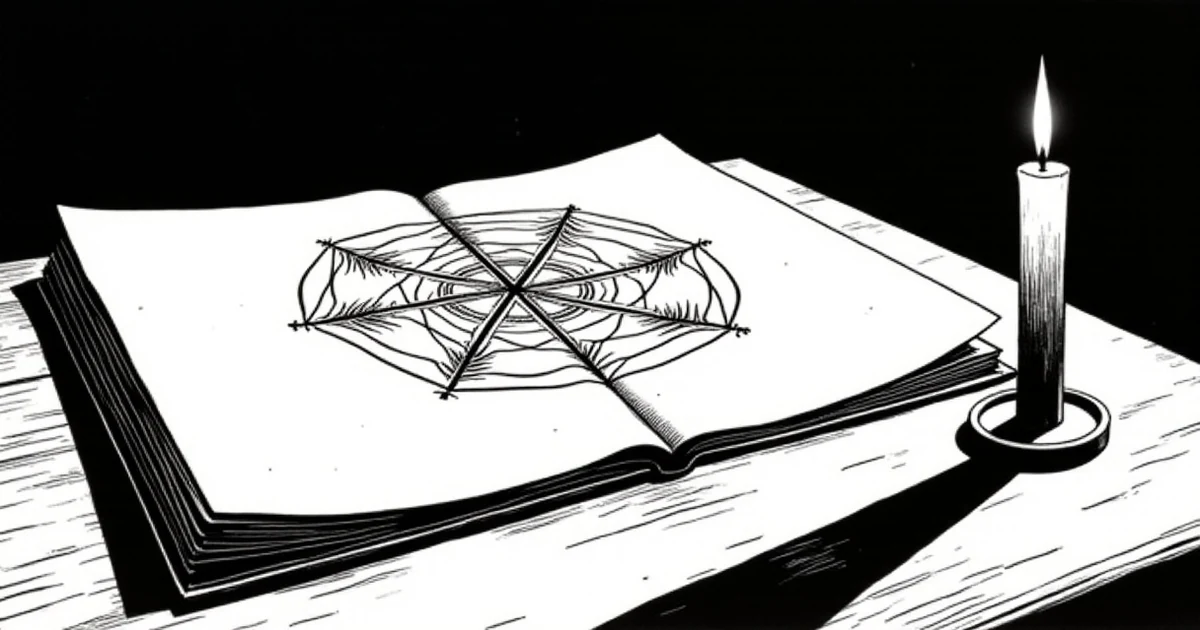
TL;DR: The Ars notoria was a thirteenth-century manuscript promising total mastery of the medieval university curriculum, memory, grammar, philosophy, medicine, music, math, theology, through diagrams and prayer instead of years of study. Fifty-six copies survive despite Thomas Aquinas naming it by title in the Summa Theologiae and calling it unlawful and futile. The price was never hidden. A full lunar month, eight recitations of the preliminary prayers on fixed days, and by the ritual’s final two days, thirty-seven recitations layered onto three sacred images. One monk who ran the ritual, Brother John of Morigny, wrote down exactly what it cost him. The turn is that the manuscript kept better books than most of what’s sold as a shortcut today.
The Public Domain Review published this piece by medieval historian Anne Lawrence-Mathers on July 29, adapted from her book The Magic Books, and it does something most retellings of that manuscript skip. It counts the cost.
The Ars notoria enters the historical record around the start of the thirteenth century, anonymous and already circulating in university towns, where a proper education in the trivium and quadrivium could run a decade and more money than a cleric’s son usually had. It offered a shortcut. Labyrinthine diagrams paired with prayers in Greek, Hebrew, and something the text calls Chaldean. Recite the words correctly, look into the figures with the right attention, and it claimed to open direct contact with angels, and through them, mastery of grammar, rhetoric, dialectic, philosophy, medicine, music, geometry, mathematics, theology. All of it. Fifty-six manuscripts survive today, which for a text the church tried repeatedly to bury is its own kind of testimony.
Thomas Aquinas took it seriously enough to give it a question of its own in the Summa Theologiae, Book Two, Part Two, Question 96, and the verdict was that the art was unlawful and futile. Futile because it could not deliver. Unlawful because its signs were neither ordinary language nor sacrament, which left only one source for them.
The manuscript itself never pretended the knowledge came free, and that is the part worth sitting with. It billed in time, and it billed precisely. First, the general gifts, memory, intelligence, eloquence, through prayers called the triumphales, attributed to Solomon. These had to be repeated on eight fixed days inside a single lunar month: the fourth, eighth, twelfth, sixteenth, twentieth, twenty-fourth, twenty-eighth, thirtieth. No shortcuts inside the shortcut. Then the specials, the actual subjects, layered on top. For Grammar alone, three images looked into in a set order, in the evenings, the first held before the practitioner across fourteen nights, its words recited twenty-four times, the image itself gazed into twelve times. By the last two days of the month, all three images together, twelve lookings each, thirty-seven recitations of the prayers around them. A full month bought one subject. Nine more waited.
One man wrote down what that price felt like from inside it. Brother John, a monk at the abbey of Morigny near Étampes in the early fourteenth century, had already been copying borrowed books of necromancy when a medical expert from Lombardy told him where to find a copy of the Ars notoria, at the school in Orléans. He ran the ritual for a full lunar month, correctly, ending the night before the new moon as instructed. That night he had a vision of three figures he first mistook for the Trinity. They ordered him to continue for eight more days. Further visions came, figures demanding worship. It took the Virgin Mary, with John the Evangelist speaking for her, to tell him plainly that what he had been doing was, in his own words, deeply evil.
Even that did not settle it. He went back to necromancy afterward, boasted of forging the Rings of Solomon, and only later wrote his own replacement, thirty prayers meant to deliver honestly what the Ars notoria had promised and lied about. That replacement was condemned and burned at the University of Paris in 1323.
Nobody in this story, not the anonymous author, not John, not the theologians arguing against him, treated total knowledge as something owed for nothing. The manuscript named its price in moons and recitations. Aquinas named his objection by book, part, and question number. Even the burning has a year attached to it. Everyone kept a ledger.
Weigh that against whatever is being offered to you this week as instant, as immediate, as a shortcut past the years the old masters said it took. Ask what page the bill is on.
Comments are open to members. Sign up free →