The Ozark Witch Census Came Back Twenty-One to Three
/Vance Randolph wrote that he knew twenty-four Ozark witches. Three said they sold themselves to the Devil. Twenty-one said they had fought the thing off.
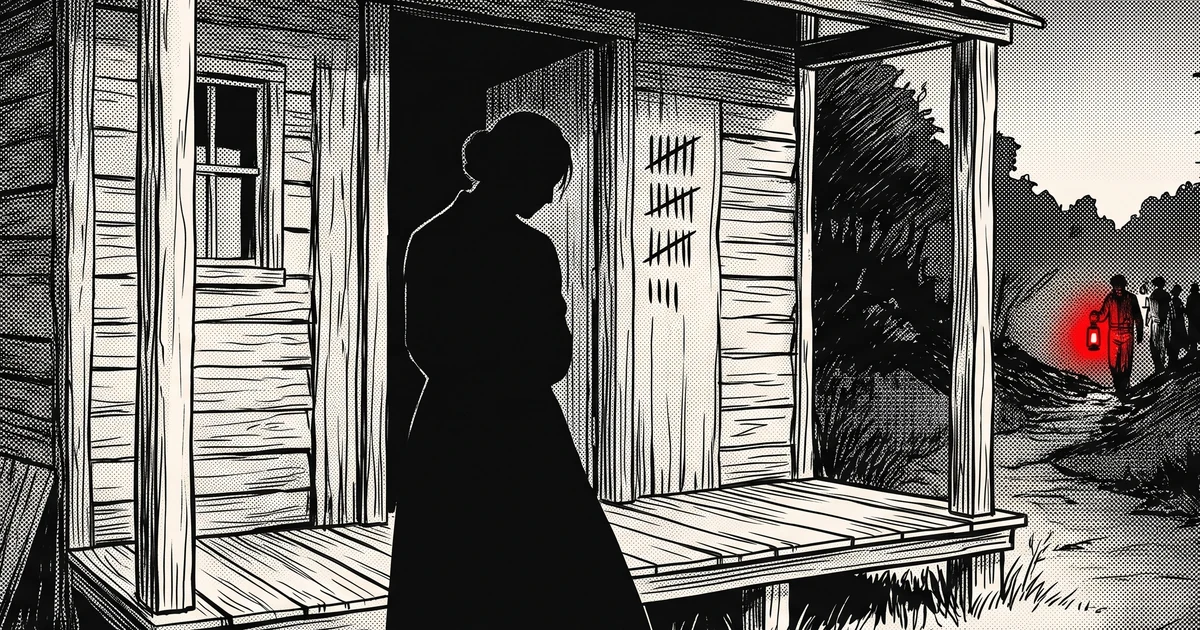
TL;DR: Vance Randolph did the thing folklorists almost never bother with. He counted the accused. The tally he published shows an Ozark community naming a woman’s work over her objection, and the naming is the part with teeth.
Vance Randolph wrote that he knew twenty-four witches.
Their neighbors were certain of it. Twenty-one of the witches told him the neighbors had it backwards.
He spent decades up in those hills collecting remedies and ballads and planting signs and dirty jokes and the kind of information about a person that can get a woman run off her own road, and when he finally sat down to write up witchcraft he did something almost nobody in folklore does. He counted.
Of the twenty-four people their communities regarded as witches, three said they had sold themselves to the Devil. “These three women were quite mad, of course,” Randolph wrote, and went straight on to the part that actually interested him: the neighbors did not file them under lunatic. They filed them under witch. The other twenty-one said their work ran the opposite direction, that they pulled spells off people and broke curses and fought the same thing the neighbors were scared of.
That tally is why I can’t put this one down. A community gets to decide what you are, it goes on deciding after you’ve told it to its face that it’s wrong, and there’s no appeal and no clerk to file with. I build everything so I can walk away from it because of arithmetic like that.
The word arrived from across the fence.
Randolph used it for a woman believed to have dealings with the Devil and power she turned on her neighbors. Accusation is baked into the definition before anybody opens her gate.
She gets elected to it. The settlement does the voting, the year it needs an author for its misfortune.
Livestock sickens. Milk turns. A baby doesn’t come back around, or a marriage goes to fists, and the woman standing nearest all of it is solitary, or difficult, or poor, or old, or sexually suspect, or foreign to the hollow, or too good at things respectable people pretend not to know about.
Then her knowledge changes polarity. Whoever knows how to take a curse off has to know something about putting one on, and the healer who handles the frightening cases carries some of the fright home in her coat.
Witch master, white witch, goomer doctor, conjure folks. The practitioner hears protection in those words and the man across the fence hears access to something he was never issued. Same pair of hands, medicine from the front porch and witchcraft from the far side of the property line.
The three who agreed got diagnosed instead of believed.
A woman who tells you she sold herself to the Devil might be sick. She might also be scared of hell, or putting on a show, or running a private cosmology nobody around her could read, or worn down from every direction at once, or taking the only part the neighbors were ever going to cast her in.
Randolph took the first option, and the ease of that “of course” says as much about the frame he was working in as about the three of them. Folklore records belief without settling ontology, and I’m not fixing to diagnose three dead women off one paragraph.
Give him this much, though. The sentence right after the diagnosis is the one I’m building on. He noticed that the settlement had reached a different verdict than he had, and that its verdict was the one with force behind it.
Line the two numbers up and you can see it. Twenty-one denials cleared nobody, because the accusation lived in other mouths, which is the only address an accusation has ever needed.
It’s the same arithmetic that decides whether the thing you make counts as work or as a hobby, and you don’t get a vote in it. They didn’t need her confession. They’d already voted, and a vote like that doesn’t get un-cast because the woman says it’s bullshit.
An accusation turns weather into a neighbor.
A failed crop has late frost in it, and bugs, and bad seed, and a rain that showed up two weeks after it was any use, and forty other things nobody in that county could see or fix. A cursed crop has a person.
You can watch a person. You can shun her, brace her at the store, run her off her land, and a face you can hate beats an answer you can’t do a damn thing about.
The accusation policed difference too. Those settlements ran on mutual aid and long memory, and a woman standing outside the expected traffic of favors was a loose part in the machine.
Somebody who knew private remedies had power without an office. Refuse the ordinary deference on top of that and you could be made to answer for every broken thing inside a mile.
This doesn’t make every Ozark witch story a social prosecution in a costume. People believed it down to the bone, and some practitioners reached for the language of power on purpose because it worked on the ones already scared of them.
What the neighbors filed her under and what she called herself were two different records. That’s all the count proves.
The number is the whole argument.
One witch makes a legend. Twenty-four accused makes a system with a headcount, and three admissions against twenty-one denials shows how that system handed out authority.
The community settled what the practitioner was, and the practitioner’s objection went into a folklorist’s notebook instead of a courthouse record. That’s the part that ought to itch.
Go look at any witchy corner of the internet and the accused come back rehabilitated, every one of them a secret feminist herbalist, handed a set of values she never asked for. I’ll take that costume off her too. Fitted without consent, same as the first one, and it’s horseshit in a nicer hat.
Some of them practiced folk medicine. Some worked magic and meant every word of it. Some frightened their neighbors on purpose, some were mentally ill, and some were ordinary women the gossip picked out of a lineup for no goddamn reason at all.
You can’t get the clean version out of Randolph’s count. Twenty-four human beings filed under one word, twenty-one of them pushing back, and the word held anyway, the way a name holds when somebody else owns the ground you’re standing on.
Randolph got the denials on paper and nothing at all from the other side of it, the evening the neighbors settled the matter among themselves and picked which woman was going to carry the year’s bad luck. Who talked first in that room?
Sources
- Vance Randolph, Ozark Magic and Folklore (Dover, 1964), p. 265. First published as Ozark Superstitions, Columbia University Press, 1947. The twenty-four / three / twenty-one count, the line about the three women, and the list of practitioner names all sit on that page. Randolph puts his own headcount at “more than a score” a page earlier, on p. 264.
- Jason Mankey: Ozark witchcraft, superstition, and folklore, where I first hit the passage, and whose footnotes carry the Dover page numbers.
Frequently asked questions
How many accused witches did Vance Randolph interview?
Twenty-four. He wrote that he had known and talked with all of them, and that their neighbors held them to be witches.
How many said they had sold themselves to the Devil?
Three, by his account. Randolph called those three mad and moved on, but noted that their neighbors did not regard them as lunatics, they regarded them as witches. The remaining twenty-one told him they worked against curses rather than casting them.
What names did Ozarkers use for protective practitioners?
Randolph listed terms including witch masters, white witches, witch doctors, faith doctors, goomer doctors, and conjure folks.
Comments are open to members. Sign up free →