The MKUltra Hearing Kept Coming Back to One Furnished Bedroom
/A 1977 Senate hearing rebuilt MKUltra from the surviving budget paper: 149 subprojects, unwitting drug tests, and a safehouse bedroom behind the glass.
TL;DR: A 1977 Senate hearing tried to rebuild MKUltra out of the CIA’s own accounting after the agency burned the program files. Money survived where memory didn’t, and money is specific about what it bought.
I’ve got the hearing transcript open in another window while I write this, a scanned government PDF with the type gone soft at the edges, and my eye keeps sliding off the drug lists and landing on the furniture. The furniture is itemized.
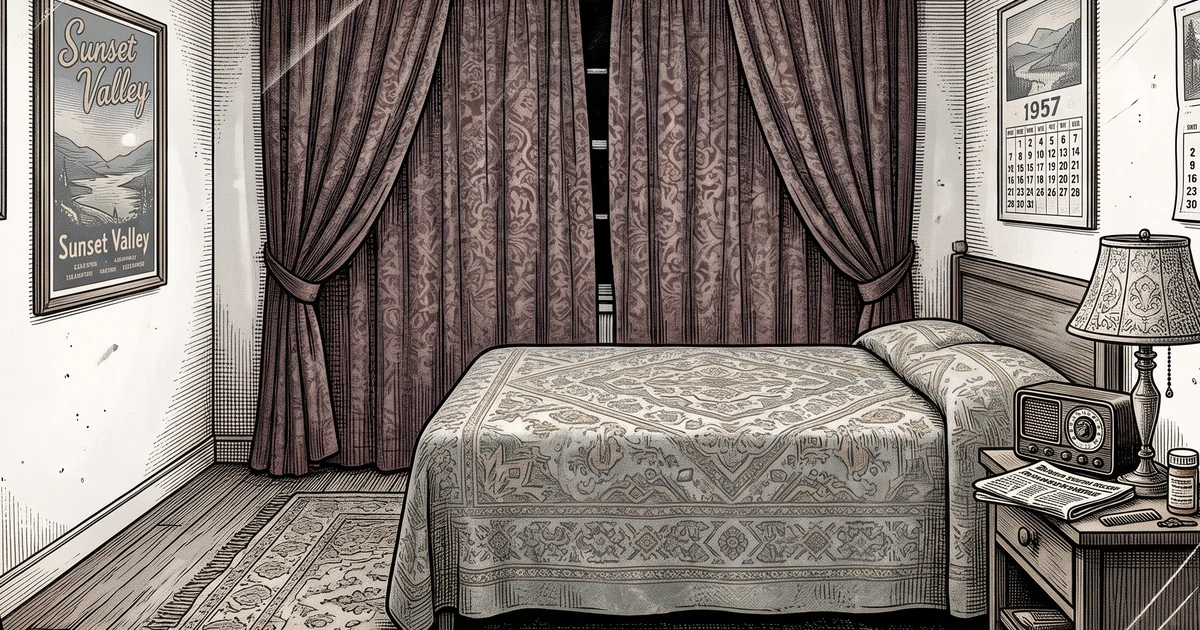
Senator Ted Kennedy kept asking about a bedroom, and the room he kept asking about had red curtains and Toulouse-Lautrec posters framed with black silk mats and two-way mirrors and recording equipment and cash moving through it in amounts small enough to vanish into a line item, and men were brought there, given drugs they never agreed to take, and watched from behind the glass. That’s the room.
The exchange comes from a joint Senate hearing on August 3, 1977. Admiral Stansfield Turner, then Director of Central Intelligence, sat at the table. So did CIA psychologist John Gittinger.
I keep coming back to this file because I spent years in a uniform where the answer to most questions was that I didn’t need to know. You get handed your piece. You work your piece, and nobody is lying to you, and nobody is telling you shit.
Everybody argues about the drugs. The glass had to be ordered and sized and invoiced and hung on a wall by a man drawing a paycheck, and that’s the part I can’t put down.
The burn order missed the budget office
In 1973, on his way out the door, Director Richard Helms ordered the MKUltra files destroyed, and most of them went. Earlier investigations already knew the shape of the thing: drug testing, behavior modification, work farmed out through universities, hospitals, prisons, foundations, and private contractors.
Then somebody found the money. A batch of financial records had survived because they sat with budget material instead of operational files, and paper that boring doesn’t get rushed into the incinerator, which is the whole reason we know a damn thing about any of it.
What surfaced was 149 subprojects across dozens of institutions, covering drugs, hypnosis, sleep, isolation, electroshock, and whatever else might get a hand inside another person’s behavior. I’ve built enough on rented land to know the cheap version of that feeling. When somebody else holds the record, the record is theirs to burn.
The 1977 hearing was an attempt to reconstruct human experiments from ledgers with the explanatory files gone. Every answer arrived with a hatch built into it: the witness did not know, the record did not say, the officer responsible was dead, and the project name had been chosen to conceal the activity.
Midnight Climax rented apartments and decorated them
San Francisco and New York. Ordinary buildings, ordinary doors, rent paid on time by an outfit that did not exist on the lease.
Under Operation Midnight Climax the CIA used safehouses to watch what drugs did to people who never agreed to take them. Sex workers brought men to the rooms. LSD and other substances could be administered while agency personnel watched through the mirrors.
Kennedy read the decor out of the records: French can-can dancers, floral pictures, drapery, red curtains, framed posters with black silk mats, mirrors, recording equipment. Somebody expensed all of it, and somebody approved the expense.
Nobody writes “unwitting human experimentation” on the voucher. They write drapes, and the agency dosed American citizens in a rented apartment and billed the taxpayer for the goddamn drapes.
Gittinger testified that he knew Morgan Hall, an alias used by Federal Bureau of Narcotics officer George Hunter White, was involved in administering drugs to people who did not know they were taking them. Asked about the wider operation, Gittinger kept narrowing the circle of what he personally knew. Kennedy kept widening it back out.
Somebody had to order the glass
A two-way mirror does not grow in a wall. A man picked the apartment and a second man measured the opening and a third cut the check and hung the glass and drove home and ate dinner with his kids.
That division is the shape I recognize from service. A contractor wires the recording gear, a clerk moves cash in amounts that trip nothing, an officer keeps the lease current, and a researcher up the chain receives observations with the room stripped out of them, so not one of them ever has to hold the entire thing in his head at once.
Knowledge got divided until responsibility couldn’t find a chair to sit in. That same architecture then shaped the testimony, and that’s the part that sets my back teeth aching.
Big secret programs run on enough people understanding their assigned portion and never asking what the next room is for. It’s the same reason I keep my own shop small enough that I can see every moving part of it, and build the whole thing so I can walk away from any piece of it.
The committee got the scale and lost the names
Destroyed files leave a hole that nothing fills. The committee established scale, funding routes, institutional participation, and particular abuses, and it could not identify every person used as a subject or reconstruct every subproject.
Records like this pay out slowly, in page numbers and cross-references, unglamorous work and mostly the difference between an amateur and somebody who did the reading. “The CIA did mind control” is too blunt for what the record supports.
The agency funded a sprawling search for ways to alter behavior, interrogate people, induce states, dose people covertly, and work human weak spots. Some of it was speculative. Some was conventional research hidden behind a front, and some crossed straight into criminal abuse.
The documented truth doesn’t need the extra voltage folklore keeps trying to hand it. They dosed people who signed nothing, then burned the paperwork on the way out, and I can’t find a prosecution attached to any of it. Fuck that.
No one has ever produced the full list of who got dosed.
Kennedy dragged the story back from the word “research” to a furnished room every time it drifted, and that was the right pressure to apply. Programs speak in abstractions because abstractions have no pulse. A room has a door, a bed, a mirror, and a man on the wrong side of all four.
I’ve got the scan open again, page after page of a senator reading a decorator’s inventory into the record of the United States Senate. I’m hunting the line that names who was in that room, and I’m not finding it.
Sources
- U.S. Senate Select Committee on Intelligence: 1977 MKUltra hearing
- Full Senate hearing record: Project MKUltra, the CIA’s Program of Research in Behavioral Modification
Frequently asked questions
What was Operation Midnight Climax?
CIA safehouse work in San Francisco and New York, where men were brought in, dosed without consent, and watched through mirrors by agency personnel.
Why were so many MKUltra details missing?
Helms ordered the program files destroyed in 1973. What investigators turned up four years later was budget paperwork that had been stored apart from the operational records.
How many MKUltra subprojects did the 1977 records reveal?
149, spread across dozens of institutions including universities, hospitals, prisons, foundations, and private contractors.
Comments are open to members. Sign up free →