Take Away Control and the Static Starts Growing Faces
/Whitson and Galinsky's 2008 experiments tied a knocked-out sense of control to seeing patterns nobody planted. Later labs went looking and came up short.
TL;DR: Whitson and Galinsky ran six experiments in 2008 and reported that people stripped of control saw structure the material never contained: shapes in noise, correlations in random stock data, conspiracies, superstition. Self-affirmation weakened part of it. Later labs failed to reproduce some of that, so treat it as a working hypothesis with a limp rather than a law you can swing at strangers.
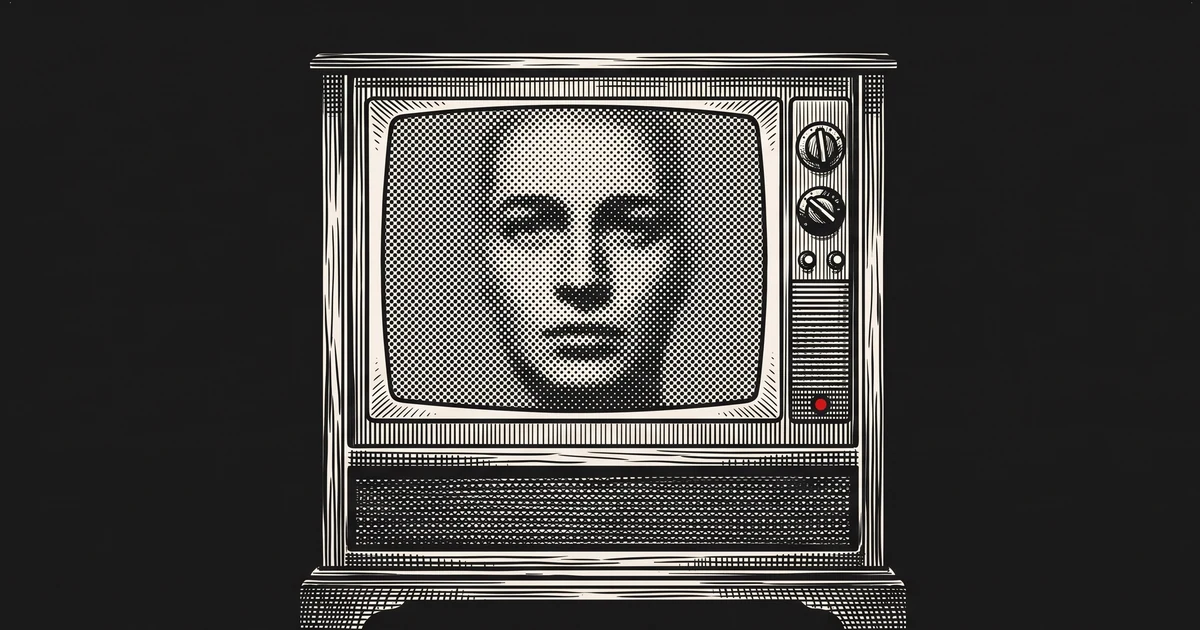
Static on a dead channel will grow a face if you sit with it long enough.
In 2008, Jennifer Whitson and Adam Galinsky published six experiments under the title “Lacking Control Increases Illusory Pattern Perception.” Participants whose sense of control had been knocked out from under them were more likely to report images in visual noise, find correlations in random stock information, perceive conspiracies, and endorse superstition.
The paper took a whole messy family of beliefs and hung them on one lever. Pull control out of a person and the mind starts drawing harder lines between the dots.
I reckon I know that lever from the receiving end. Ten pills a day and a claim number, and a process that settles your next year in a room you’ll never stand in, and every month you wait you get a little better at reading the future off whichever envelope shows up in the box.
Nobody at the VA set out to take my control. They ran a machine where a man’s whole year hangs on somebody else’s paperwork, and that is its own species of horseshit.
So I can’t leave this paper alone. It describes the inside of those years better than I can, and I want to know how much of it survived contact with other laboratories.
Six experiments in manufactured helplessness
Grainy images, some with a real object buried in the grain, some with nothing in them at all. The researchers manipulated or had people recall experiences of control, then measured several kinds of pattern perception: the noise task, information about stock-market outcomes, questions about conspiracy, questions about superstition.
Across the studies, lower control went with seeing more connections than anybody had built into the material. Whitson and Galinsky argued that the pattern seeking does a job. A world with causes running through it is easier to carry than a world of noise, and a hidden hostile actor is easier to hold in the hand than nobody at the wheel at all, which is why a rigged game beats an empty one every time you’re the one losing.
That reading explains why conspiracy belief thickens during war, plague, layoffs, political collapse, and whatever this decade is doing to the job market. The theory runs on ordinary people standing where the floor used to be. Anybody who has watched a platform change its rules overnight and eat a year of work knows the shape of it, which is most of why I keep hollering about renting the reach instead of owning the readers.
Self-affirmation dented the effect
Write down a value that matters to you. Then go look at the noise again.
When participants got the chance to affirm something personally important, the reported link between lack of control and illusory pattern perception weakened. Sharpest thing in the paper. Whatever the eye is doing, the self is holding the leash, and give a person a little footing back and the random field quits demanding an explanation quite so loud.
That puts the belief downstream of a wound, which matters if you’ve ever tried to argue somebody out of one. You can pile facts on a man all damn day and watch them bounce, because the belief is doing emotional work the facts never touch.
Go ahead and be humane about it. Owning something outright is one of the few doses of control a man can hand himself, and I spent a whole piece on that in built so you can leave.
Humane has a floor, though. False beliefs put people in the ground, and knowing what need a belief is feeding is how you find the seam where a correction might hold.
Other labs went looking and came back short
- A paper titled “Experimental Manipulations of Personal Control do Not Increase Illusory Pattern Perception,” and the title is the finding.
Those authors reported several failed attempts. They found no reliable increase in false pattern perception from their own control-threat manipulations, and they raised the question of whether the visual-noise task might be picking up priming or demand effects instead.
The 2008 experiments are on the books and they stay there. The casualty is the swagger behind the clean causal slogan somebody built on top of them.
Psychology is full of results that arrive as a striking story and shrink into a narrower, conditional one once enough labs put their hands on it. The narrow version can still be worth having. It loses the costume of universal law, and a hell of a lot of people would rather have the costume than the finding.
The usable part is smaller than the headline
People reach for structure when the ground moves. That claim holds up well past this one paper. The exact road from an experimentally shortened sense of control to a face in the snow is rougher and less mapped than the headline lets on.
For anybody arguing online, the lesson is to quit swinging psychology studies at strangers like a tire iron. “They believe conspiracies because they lack control” is itself a pattern laid over a whole population, and it hands the speaker a warm feeling of mastery he never earned. That’s bullshit with a citation stapled to it.
Use the thing local and diagnostic instead. When a frightening story starts moving through a town or a timeline, ask what uncertainty it organizes, which institution failed, which loss nobody has said out loud yet, and what kind of agency the belief hands back to the person holding it. Then go check the evidence anyway, because a real need underneath a story ain’t the same as the story being true.
I run a pattern-finding machine for a living now, and I’ve written about how I use AI to write without pretending the thing knows what a pattern is for. Pattern-making animals reading papers by other pattern-making animals about the hazards of pattern-making, and the papers keep coming.
That leaves me the one part I can’t settle. Some nights I’m looking at a pile of unrelated facts and something under the ribs insists they’re wired together, and I’ve got no test for that from inside the skull doing the looking. Is that the machinery working, or is it begging?
Sources
- PubMed: Whitson and Galinsky, 2008
- Columbia Business School: Paper abstract and citation
- Collabra: Failed replications of control manipulations and illusory patterns
Frequently asked questions
How many experiments were in the 2008 paper?
Six, each aimed at a different flavor of illusory pattern perception.
What kinds of false patterns did participants report?
Shapes and objects in visual noise, correlations in random stock information, conspiracy perceptions, and superstitious belief.
Has the effect been replicated consistently?
No. Later work reports mixed results, and a 2018 paper found no reliable increase in illusory pattern perception from its own control-threat manipulations.
Comments are open to members. Sign up free →