The CIA Never Wrote the Gateway Process Memo
/A 1983 Army assessment of the Monroe Institute's Gateway program: binaural beats, borrowed physics, and one officer fitting mystical states into a memo.
TL;DR: Lieutenant Colonel Wayne M. McDonnell wrote the Gateway Process assessment for the U.S. Army in June 1983. The CIA Reading Room only holds the copy. Inside it: binaural beats, borrowed physics, a holographic model of reality, and an officer trying to get mystical experience past a staff review.
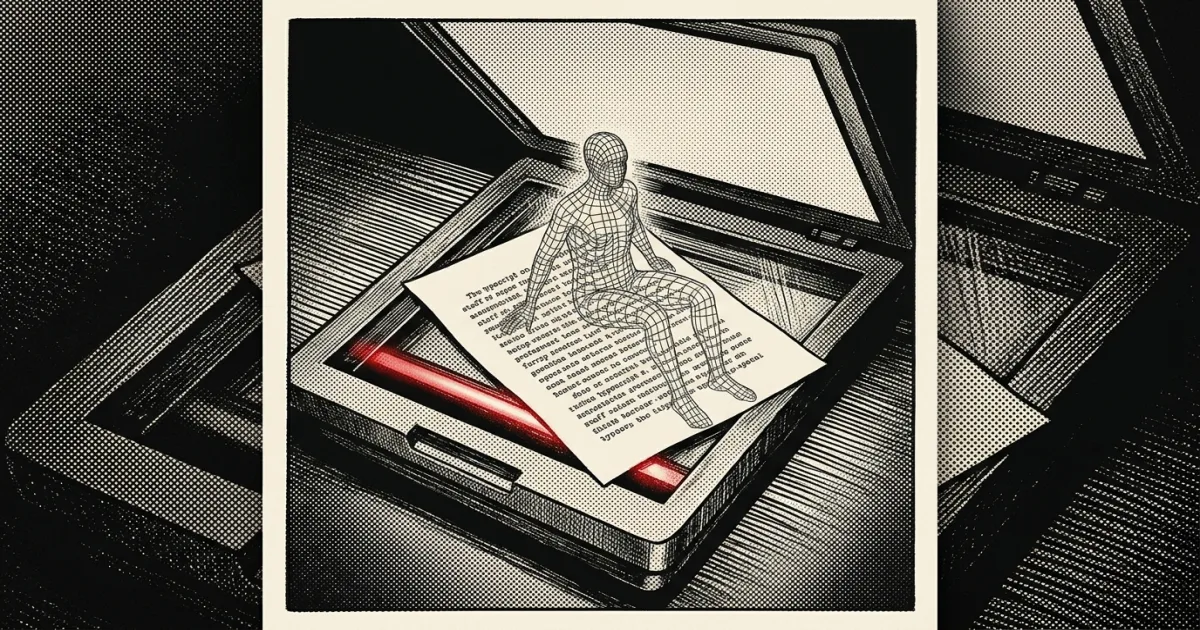
The scan sits crooked. Somebody in a government office laid a 1983 staff paper on a glass plate at an angle, hit the button, and forty years later a few million people are reading the escape hatch out of their own bodies off a document that isn’t square in the frame.
McDonnell wrote it for the Army. The Reading Room is where the declassified copy lives, which is custody and nothing more, and out of that filing accident an Army officer’s assessment became the CIA’s manual for escaping your body. Horseshit, and also the engine under a thousand videos with ominous music beneath them.
I spent enough years around Air Force paper to know the shape of this thing before I read a line of it. The margins, the numbered paragraphs, the flat declaratives that have been through somebody’s review and come out sanded smooth on both sides.
Same skeleton as every staff paper I ever had to read. It’s carrying quantum mechanics and the survival of consciousness after death.
That’s the part I can’t leave alone. A man in uniform sat down with the standard format, the one built for maintenance schedules and manpower requests, and tried to get God past a staff review.
Hemi-Sync, Focus 10, and the numbered states
Two tones, one in each ear, slightly out of step. Your head manufactures a third pulse that isn’t in either channel, and the Monroe Institute called that Hemi-Sync and wrapped a training program around it with breathing, relaxation, visualization, and a voice on tape telling you where to go.
The stages got numbers. Focus 10 was the mind awake while the body slept, Focus 12 was expanded awareness, Focus 15 was described as a state beyond ordinary time, and past that the exercises aimed at out-of-body perception and information from outside normal sensory range.
There ain’t anything supernatural about sound changing how a person feels. Drums, chanting, repetition, sensory deprivation, and controlled breathing have been doing that job since before anybody thought to write it down.
Binaural beats are real as an auditory effect. The claims stacked on top of them are a separate question, and McDonnell had to cross that gap inside a document that gets routed up a chain of command.
McDonnell built his model out of borrowed parts
Itzhak Bentov’s ideas about the body as an oscillating energy system. The holographic model associated with the physicist David Bohm. A pile of vocabulary out of quantum mechanics, pressed into service to suggest reality might be an enormous field of information.
He treated consciousness as a pattern rather than something sealed inside the skull. If the brain could sync itself, cut the sensory noise, and resonate with that field, then maybe a person could pull information from outside the body.
That’s the bridge. It’s also where the explaining stops and the guessing starts.
Scientific vocabulary can make a bridge look like it’ll hold weight. Frequency, resonance, energy, hologram: every one of them means something specific in physics, and every one of them can be stretched until the metaphor starts impersonating a mechanism. Quantum mechanics is fucking weird on its own terms, which is exactly what makes it such a convenient loan.
No experiment in that document clocks a man in Focus 15 stepping outside of time. Reasoning stands where the evidence should be, one intelligent officer’s 1983 idea of how such a thing might fit together, and that’s a stranger and more human artifact than proof would have been.
McDonnell wasn’t a carnival psychic working a tent. He knew he was making a hard argument to people who wanted a usable assessment, on a deadline, with a budget line to protect, and the result reads like a man trying to smuggle God through a security checkpoint by declaring Him a waveform.
Declassified is a filing status
Government archives are stuffed with proposals, dead ends, raw reports, arguments, mistakes, and programs somebody once believed were worth a look. The stamp at the top establishes custody. It doesn’t turn conjecture into law.
Custody is worth something anyway, and anybody who has ever built an audience on somebody else’s platform already knows why. Whoever holds the file writes the story about the file.
Half the conspiracy economy runs on that confusion. Beautiful goddamn business, if you don’t mind lying by implication.
The Army and the intelligence community did investigate remote viewing and related psychoenergetic techniques under programs including GRILL FLAME and CENTER LANE. The Gateway material sat near that work, and personnel used Monroe training as one possible way to cultivate controlled mental states. Later reviews did not establish remote viewing as a dependable intelligence tool.
The memo survives as a record of institutional curiosity. Inside the same government that manufactures forms for manufacturing forms, and that’ll fight a man for years over a claim with his own X-rays sitting in the file, officers were lying flat on their backs with headphones on, trying to get their awareness to come loose from the meat.
The paper keeps resurfacing because it reads like instructions
A government URL, a ritual you can run tonight in your own house, and permission to believe the bureaucracy accidentally filed proof of the infinite. Nothing on the internet survives that combination.
Most mystical systems arrive through scripture, oral tradition, initiatory theater, or some jackwagon in linen trousers charging eight hundred bucks for a weekend of supervised breathing. Gateway arrives as an assessment with numbered paragraphs and no upsell.
The prose makes transcendence feel reproducible, and that’s the whole seduction, because complete the steps and reach the focus state and move past time is a preflight checklist written for a man who has never once been off the ground. Anybody can follow a checklist.
I get the appeal. A procedure is easier to trust than a revelation because it looks like something you can test alone in a dark room with the door shut, which is more or less how I build everything else I own.
I keep written procedures for how I write with machines for the same reason. A checklist survives a bad night. A revelation doesn’t.
The useful reading of the Gateway memo sits somewhere between contempt and worship. Nothing in those pages proves consciousness can leave the body.
The assembly is the thing. Sound and ritual and expectation and physiology and a whole theory of reality bolted together into a machine for producing extraordinary experience, built by men who had to justify the parts list.
That machine runs on headphones and metaphor. People have crossed longer distances in worse vehicles.
I scrolled back to that crooked first page and read the date line instead of the theory.
Sources
- CIA Reading Room: Analysis and Assessment of Gateway Process
- CIA Reading Room: INSCOM CENTER LANE Project
- CIA Reading Room: Monroe Institute Gateway workbook
Frequently asked questions
Did the CIA write the Gateway Process document?
No. U.S. Army Lieutenant Colonel Wayne M. McDonnell wrote the assessment in June 1983. The CIA released a copy years later through its declassified Reading Room, which is why the agency’s name got welded to it.
What is Hemi-Sync?
The Monroe Institute’s audio training method. Different sounds in each ear, plus guided relaxation and mental exercises, aimed at producing specific subjective states in the listener.
Does the memo prove out-of-body experiences are real?
It proves an Army officer assessed the program and offered a speculative model for how it might work. It does not provide conclusive experimental proof that consciousness travels independently of the body.
Monroe’s own account is Journeys Out of the Body, the 1971 book the Institute and the memo both grew out of.
As an Amazon Associate I earn from qualifying purchases. These are affiliate links, same price to you, and it helps keep the lights on.
Comments are open to members. Sign up free →