Four Murder Mysteries Walked Out of Copyright
/Four detective novels from 1930 landed in the U.S. public domain in 2026. Hammett, Sayers, Christie, Carr, free to reprint, adapt, record, and take apart.
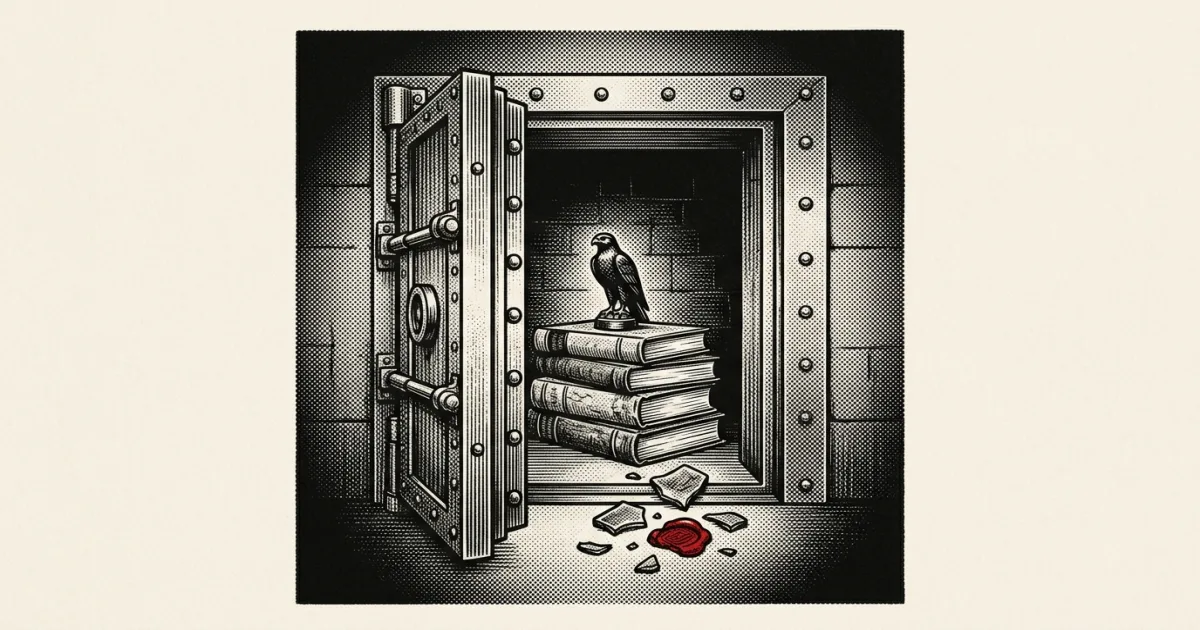
TL;DR: The 1930 editions of The Maltese Falcon, Strong Poison, The Murder at the Vicarage, and It Walks by Night went U.S. public domain on January 1, 2026. Read them, adapt them, record them, republish them. Check the edition and the non-U.S. rights before you sell anything.
Copyright expired on a black bird, a poisoned novelist, a corpse in a vicar’s study, and a headless man in a locked room.
Works published in 1930 entered the U.S. public domain on January 1, 2026. I read the Duke list the way other people read an estate sale flyer, scrolling past Faulkner and Freud and Frost and one little engine with an alarming work ethic, looking for the bodies.
I sell cheap things I own outright. A list of books nobody can bill me for goes straight into the inventory column.
Four mystery novels are on the common table now. Dashiell Hammett’s The Maltese Falcon, Dorothy L. Sayers’s Strong Poison, Agatha Christie’s The Murder at the Vicarage, and John Dickson Carr’s It Walks by Night.
They came out of the vault as raw material, and raw material is where the trouble starts.
Public domain is a permission slip with fine print
Ninety-five years. That’s the wait on a book published in 1930, and twenty of those years got bolted on by Congress in 1998 so a cartoon mouse could keep his job, which means four novels sat in a legal coffin two decades longer than the original bargain promised and not one person in that building gave a damn what it cost the writers who wanted to work with them.
What you get on the far side of the wait is clean. In the United States you don’t need permission from anybody to publish a new edition, cut an audiobook, write an adaptation, annotate the text, teach it, turn it into a comic, or take the whole machine apart on a workbench.
The fine print is where people get hurt. A 1930 text can be free while a later translation, introduction, cover, restoration, or revised edition stays locked up tight, and finding that out from a publisher’s lawyer who bills more per hour than your print run will ever clear is a hell of a way to learn to read a copyright page.
Trademark can complicate how you market a derivative work. Copyright terms run different lengths outside the United States, and none of that goes away because a U.S. date passed.
Establish which version you’re holding before you sell pieces of it. That’s the whole discipline, and it’s the same discipline as owning the storefront instead of renting the reach.
A verified text, a real introduction, a clean cover, and you’re holding the smallest thing that sells for three dollars.
Hammett built an engine out of shared delusion
A black bird made of lead and paint. Everybody in the book wants it and nearly everybody lies about why.
Hammett’s novel got absorbed so completely that it turned into a texture, all shadows and cigarettes and Bogart’s voice under a hat brim. The structure underneath beats the mood sitting on top of it.
Sam Spade stays alive by watching what wanting does to a room.
The falcon is worth money because people agree to behave as though it is. That makes the book a detective story and a short course in markets, cults, brands, and every online collectible that ever grew a floor price out of nothing but agreement. A JPEG is worth six figures for exactly as long as the room keeps its shit together.
Strip off the fedora cosplay and read the transactions instead. Who pays for information, and who believes that owning the thing will close a hole in himself.
Hammett keeps the answers moving and never lets a single character rest on one.
Sayers refused to hand Harriet over as a prize
Arsenic, and a woman in the dock for it. Sayers opens with mystery writer Harriet Vane on trial for murdering her former lover. Lord Peter Wimsey believes she’s innocent, works the case, and falls for her while he’s doing it.
That’s a rescue fantasy with the safety off, and Harriet won’t be handed to the detective as payment for solving the puzzle.
Cracking a woman’s murder charge doesn’t buy you her consent. Sayers had that worked out in 1930, which is more than I can say for a whole shelf of thrillers published since, the ones where the woman gets handed across the last chapter like a goddamn door prize.
If you’re writing a brilliant investigator, take the warning. A character who can solve every external problem gets unbearable fast unless one human being stays outside his method and won’t come in.
Miss Marple ran a listening post out of a village
A colonel everybody hated, shot dead in a vicar’s study. The Murder at the Vicarage was the first full-length Miss Marple novel, and the machinery is odd for a debut: suspects confess too freely, timelines wobble under the weight of everybody’s alibi, and the elderly woman the whole village has written off as harmless keeps noticing that people repeat themselves in small ways long before they repeat themselves in large ones.
The village is her database.
Modern crime fiction reaches for credentials, surveillance, forensic spectacle, an expensive machine that goes ping. Christie built a working intelligence service out of tea, memory, and whatever men leak in front of a woman they’ve already dismissed.
Given the choice I’ll take the old woman who has watched the same few hundred people her whole life over any lab with a budget line.
Carr’s first book is the one worth stealing from
A newly married duke walks into a guarded room alive. His head turns up later.
Carr’s first Henri Bencolin novel hands you the murder and takes away every route to it. No way in for the killer, no way out.
Carr was early here, and the book is messier than the monuments he built after it. That’s the reason to read it.
You get to watch a locked-room obsessive find out which hinges will hold his weight, and rough early work like that has taught me more than any finished monument, which is an argument I’ve made about my own stuff more than once.
Public domain culture orbits the famous names until the small bodies disappear underneath them. Carr is why you keep reading past the promotional list.
An imperfect early machine hands a working writer more usable parts than a classic everybody has already stripped for copper.
Which one goes up on my own store first, the falcon that ten thousand hands have already been on, or the headless duke almost nobody has touched since Hoover was in office?
Sources
- Duke Law: Public Domain Day 2026
- Duke Law: Publication history of The Maltese Falcon
- U.S. Copyright Office: Duration of copyright
Frequently asked questions
Are these four mystery novels free to use everywhere?
They’re in the U.S. public domain on the basis of their 1930 publication. Other countries run different copyright terms, so international use needs its own check.
Can I sell my own editions or audiobooks?
Yes, if you work from a verified public-domain text and stay off material added later by editors, translators, illustrators, or publishers.
Does public domain remove trademarks too?
No. Copyright and trademark are separate systems. How you title, package, and market a derivative work can still raise trademark questions.
Comments are open to members. Sign up free →