A World That Lets You Finish It Is Dead
/The case against worldbuilding as mastery asks writers to meet fictional places as living relations instead of inventories waiting to be mined.
TL;DR: Jenna Hanchey’s argument against conventional worldbuilding attacks the author’s fantasy of mastery. A stranger and more useful craft begins when the fictional world can refuse the writer, carry histories the outline cannot digest, and charge interest on every act of extraction.
The map arrives clean. Rivers take the shortest path through blue pencil. Borders hold still.
A dead language waits in twelve tidy phonetic tables for the hero to need a curse.
The place has already been murdered.
In “Against Worldbuilding”, Jenna Hanchey names mastery, extraction, and dehumanization as colonial habits baked into the ordinary idea that an author builds a world out of available parts. For the alternative she reaches past her own toolbox and borrows worlding from Indigenous studies scholar Joseph M. Pierce, then bends it toward fiction: the writer meets a place with agency and obligation instead of ruling it.
That argument should make a writer uncomfortable. Good. Comfort has furnished a great many empty kingdoms.
I came up on a police blotter, which is the only fiction training anybody actually gets. A blotter line has a time, a street, a verb, and a hole in the middle where the reason ought to be. You do not fill the hole. You file what was on the wall and let the reader stand in it. Every world I have read that felt alive had that hole in it somewhere. Every dead one had an author who could not stop explaining.
A world held as property turns people into movable assets
Treating a fictional world as property encourages the writer to use people, histories, and places as movable assets whose only purpose is to serve the plot.
A setting reduced to inventory cannot look back at its maker. Its religion supplies atmosphere. Its dead supply ruins.
Its living cultures donate costume, food, and a few sharpened syllables to the naming system.
Context gets peeled away because context resists being carried.
Hanchey’s criticism reaches beyond insensitive borrowing. She questions the posture of the solitary god-author who claims full control over what exists and what it means. The language of mining appears often in writing talk, as though history were a seam of ore and the dead had signed release forms.
The harm can be concrete. Hanchey cites Kemi Cole’s discussion of Lake Bunyonyi in Uganda, a place marked by a history of femicide that was used as visual ground for Wakanda in Black Panther. A beautiful landscape crossed the screen.
The pain embedded there did not receive equal passage.
Writers do this in miniature whenever a cultural detail becomes exotic voltage while the people who gave it meaning disappear behind the set.
How does a writer practice worlding instead?
Worlding begins by approaching the fictional place as a relation that can alter the story, rather than a container designed to obey it.
This sounds airy until a scene puts weight on it. Let the weather close the road the outline required. Let a custom protect the wrong person.
Give the local name for a river a history that complicates the empire’s map. Allow two characters from the same village to disagree about the village.
The world earns agency by changing what the writer planned. Research becomes conversation with context. Invention remains, but it answers to consequence.
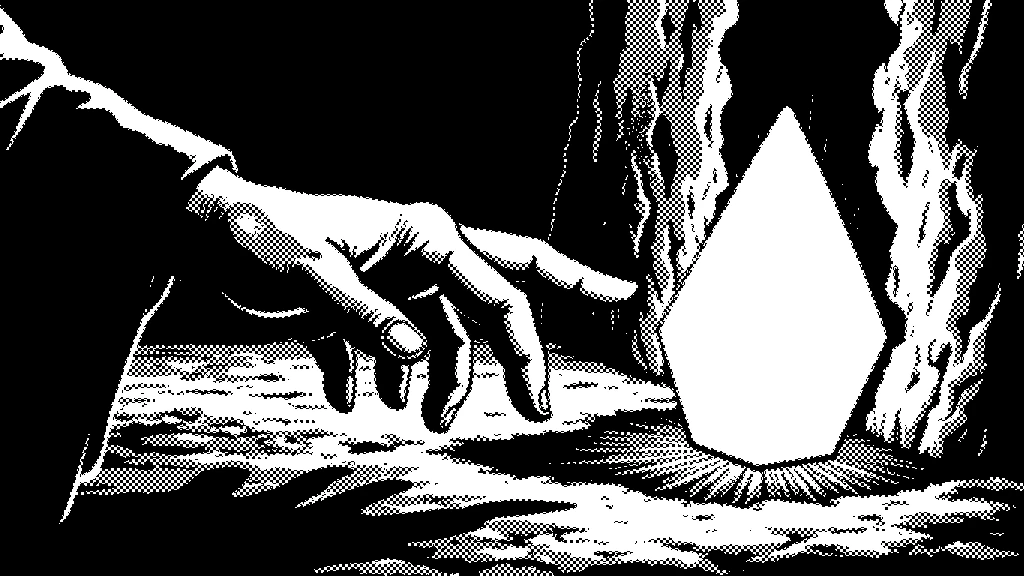
Hanchey uses the film Prospect, where miners slice into living aurelacs for the gem hidden inside each one, cutting a cord like an umbilical and opening something that looks like an egg sac to get it.
Careless hands trigger the aurelac’s only defense: acid, released to protect a piece of itself. Maybe its young. Nobody in the film finds out, and nobody asks.
The prospectors know the procedure cold. They never ask what the gem actually is.
The planet’s air already runs thick with poison spores the crew works in sealed suits and helmets to survive, a threat that has nothing to do with the cutting and everything to do with what kind of place trains men to quit asking questions. Cruelty toward the aurelac and cruelty toward each other come from the same numbness. Hanchey traces both back to the one question nobody in the film will ask.
The world does not explain itself.
Does worlding mean abandoning maps, histories, and invented systems?
Worlding changes the writer’s relationship to craft material; it does not forbid preparation.
A map can preserve distance and consequence. A timeline can stop a dynasty from having two grandfathers born thirty years apart. Languages, economies, and burial practices give characters pressures they could never generate alone.
The danger lives in mistaking completion for truth. An atlas can become a locked room where every mystery has been labeled. A magic system can turn wonder into municipal plumbing.
The writer starts correcting the story to match the binder, and the binder has never once been afraid.
Prepare what the story needs to bear weight. Leave doors shut when nobody in the scene has the right key. Let inherited knowledge arrive damaged, political, half-sung.
Real places contain arguments about their own past. A fictional place deserves the same courtesy.
Research also requires provenance. A funeral custom found in one community cannot be scrubbed, renamed, and assigned to a villain because the image felt strong. Keep the context attached long enough to hear what the source is saying.
Sometimes the answer is leave it where it lives.
The shop stocks a guide for the mechanical end of this same craft: a fictional war that holds together, supply lines over ethics.
A living world exceeds what its characters understand
A living fictional world exceeds the characters’ understanding and makes their choices cost something specific.
Its laws leave bruises. Its gods collect. Its distances consume food and daylight.
A border means one thing to the officer, another to the family whose pasture it bisected, and nothing at all to the wolves crossing after snow.
Readers feel depth when the page implies obligations beyond the camera’s reach. A widow closes a shop early on a saint’s day nobody explains.
A soldier will not step across a chalk line though bullets have already broken the windows. The protagonist gets the custom wrong and nobody pauses the scene to teach a seminar.
The writer remains responsible for every choice. Worlding does not outsource ethics to a muse or grant a mystical pardon for lazy work. It raises the burden.
The place must be met again each morning, and the answer may ruin the chapter that seemed finished last night.
I have filed from a county the state does not recognize. Nobody there was waiting to be described. That is the whole difference, and you can feel it in a paragraph before you can name it.
Somewhere off the map, the river has changed course. The people downstream know. The author will find out when the bridge is gone.
Frequently asked questions
What does Jenna Hanchey mean by worlding?
Worlding is a term Hanchey borrows from Indigenous studies scholar Joseph M. Pierce and turns toward fiction: writers engage fictional worlds as active participants with agency, context, and claims on the story, rather than as objects assembled under total authorial control.
Is all worldbuilding colonial?
Hanchey’s argument targets the assumptions of mastery, extraction, and dehumanization that often structure worldbuilding. The practical question is how a writer relates to sources, places, and people while inventing.
Can a writer still use a world bible?
Yes. A world bible can protect continuity and preserve provenance. It becomes dangerous when the writer treats it as proof that the world is complete or permission to flatten living contexts into decorative parts.
Comments are open to members. Sign up free →