An Unbeatable Warrior Is Already Dead
/Valhalla Burning gives its berserker supernatural strength, then begins where strength fails: a daughter's death and the debt left behind.
TL;DR: The premise of Valhalla Burning gives Rúnr Njalson the strength of Odin’s chosen berserker and takes his daughter anyway. That is the right wound. Power becomes story only after it fails to pay the debt that matters.
The unbeatable man comes home late.
Smoke has flattened the roof. Snowmelt runs black past the threshold. His daughter is dead, and all the enemies who shook at his name were correct about his strength and wrong about what strength could purchase.
The starred Terribleminds piece by Michael Pogach introduces Valhalla Burning: ninth-century Norway, Rúnr Njalson chosen by Odin as a berserker, Yrsa lost in a rival clan’s raid, and a hunt through the forests of the Slavs and the Rus toward Constantinople to buy her a seat in Valhalla. The premise understands the old bargain. A gift from a god is a debt wearing gold.
Why does an invincible warrior need to fail first?
An invincible warrior needs a failure his strength cannot reverse, or combat becomes weather and victory carries no human price.
A blade can end a threat. It cannot unkill a child. Once Yrsa is gone, Rúnr’s power has no clean use. He can destroy the raiders.
He can heap bodies beneath Odin’s attention. None of it restores the person whose death gave the violence its direction.
That gap creates the story. The reader may enjoy the spectacle of a berserker breaking a shield wall, but spectacle alone does not survive the walk home. Consequence does.
Every victory should return him to the same missing voice and a debt that blood can enlarge without settling.
Historical fantasy often mistakes physical dominance for mythic weight. The old stories knew better. Great strength attracts obligations large enough to crush the strong man in public.
The hero’s gift widens the circle of people who can demand its use.
Every favor Odin extends comes structured as a loan, interest due on his schedule, not the warrior’s.
What makes vengeance carry weight in Norse historical fantasy?
Vengeance carries weight when it belongs to a social and spiritual order of kinship, honor, burial, and reciprocal obligation.
Rúnr seeks vengeance to secure Yrsa’s entry into Valhalla, according to the source premise. That motive joins private grief to a cosmology where the dead have destinations and the living bear duties toward them.
The revenge must cost more than enemies. It should endanger alliances, expose an oath, consume winter stores, or force Rúnr to choose between what the clan needs and what grief demands. A raid answered by a larger raid is an incident report. A blood debt that splits the hall has roots.
Michael Pogach names the actual failure mode in his own account of writing the book. Vikings, he writes, “were diverse and beautiful, arrogant and oppressive, brutal and kind. Just like we are.”
The trap runs in both directions. Romance them into legend or flatten them into one blade-swinging trait, and law, household, status, fosterage, and trade turn into set dressing instead of the machinery deciding what a person in that world can do.
The supernatural should press through that lived order instead of floating above it in blue light.
Research will complicate the clean motive. Good. If the historical world offers one path, too straight and too well lit, somebody has swept the evidence away.
Odin works through demands, bargains, and consequences
Odin’s presence should operate through demands, bargains, signs, and consequences rather than as a metaphor for Rúnr’s anger.
The god has selected a warrior. Selection implies purpose. Rúnr may misunderstand it, resent it, or believe he can use divine strength for a private end.
The god’s silence can hold more pressure than a speech from the clouds, provided the story treats the bargain as real.
A present god changes the price of choice. Rúnr cannot dismiss his power as a mood. Other people can fear the mark, covet it, or decide the chosen man has become dangerous to keep near children and livestock.
The divine gift should also remain specific. Strength that solves every physical problem needs boundaries rooted in the cosmology. Battle fury may preserve him during the clash and leave him unable to tell friend from rival.
A victory may satisfy Odin while ruining the human reason Rúnr entered the fight.
Gods who exist only to validate the protagonist are servants with expensive names. Odin keeps his own ledger.
The cold belongs in every decision it touches
The cold belongs in every decision affected by distance, shelter, food, wounds, and the narrowing calendar.
Winter cannot decorate the mountain while characters travel as though July waits behind the ridge. Snow slows pursuit and reveals it. Sea ice closes one route and opens another.
A wet wool sleeve becomes weight. A shallow cut matters after the temperature falls.
Weather earns its place by taking a side. It may hold the rival clan within reach, delay burial, ruin provisions, or force enemies beneath one roof. The same cold that kills can preserve tracks and bodies.
Rúnr’s grief should live there without being translated into weather every third paragraph. The world is cold because it is cold. He still has to split wood, find food, and decide which living person goes without while he pays honor to the dead.
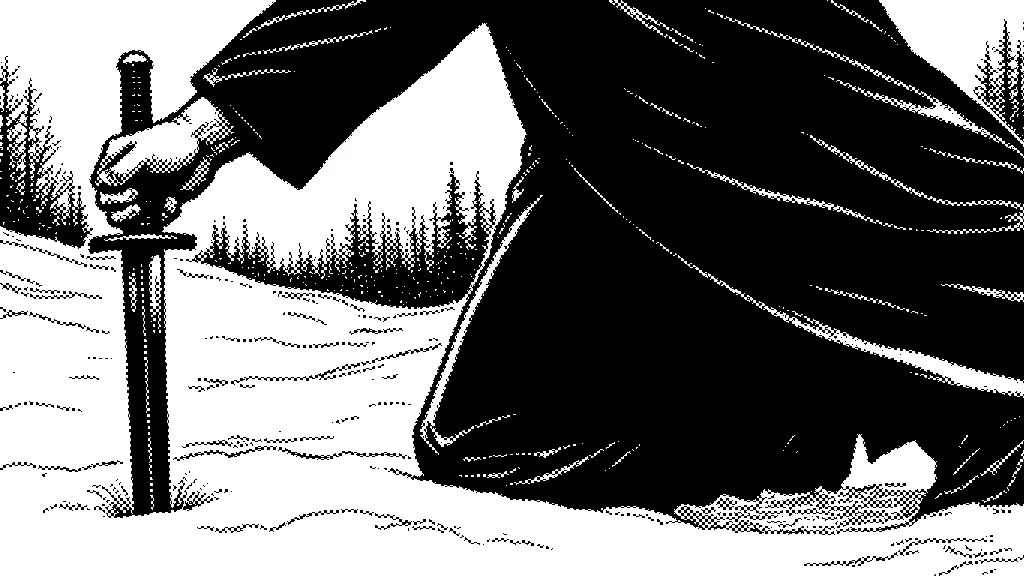
At dawn, the snow outside the hall is clean except for one set of tracks leading north. The strongest man in Norway has taken no shield.
Frequently asked questions
What is Valhalla Burning about?
The source premise follows Rúnr Njalson, Odin’s chosen berserker, after he fails to save his daughter Yrsa during a rival clan’s raid. He hunts her killer from the forests of the Slavs and the Rus to Constantinople to secure her entry into Valhalla.
How do you keep an overpowered warrior interesting?
Give the warrior obligations, losses, and moral choices that physical power cannot repair. Let victories create costs in kinship, honor, supplies, and self-command.
Should Norse gods be treated as metaphors in historical fantasy?
In a story whose cosmology makes the gods present, treat them as agents with their own claims and consequences. Metaphor can exist around that reality without replacing it.
Comments are open to members. Sign up free →