How to Start a Newsletter That Doesn't Die in the Static
/How to start a newsletter from scratch and grow it: the 10-minute setup, a 10-step plan you can run tired, and why a small list you own beats a big one you rent.
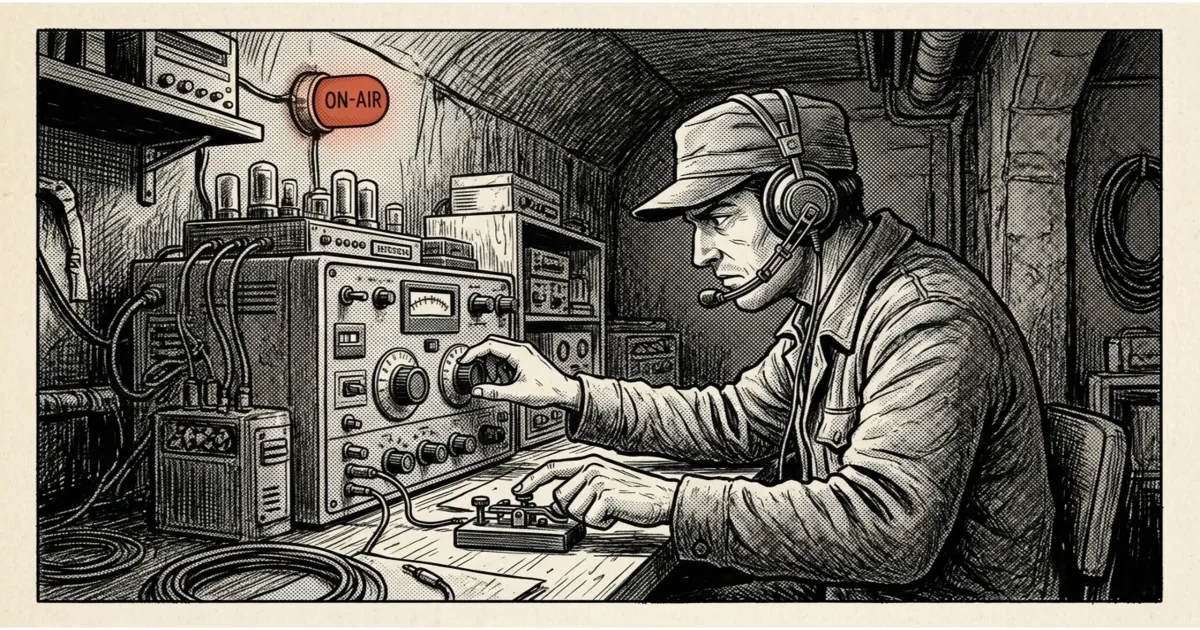
To start a newsletter, pick one platform (Substack, Kit, or Beehiiv), write a one-line signup page that promises a specific thing, send a single welcome email, then publish on a fixed schedule and reply to everyone who writes back. The whole technical setup takes about ten minutes. Everything after that is showing up consistently and treating the people on your list like humans instead of numbers. You do not need to buy an audience, build a funnel, or hit a follower count first.
That is the entire job. The rest of this guide is the 10-minute setup, the 10-step plan for growing the thing without feeding the machine, and why a small list is an advantage, not a stage you have to grow out of.
You already know what to say. The problem is the static.
I get a stack of newsletters every week. I read a couple.
The rest die in the preview pane, or they get five seconds of thumb before I swipe them into the void. And I am not a cruel man. I am just a man with a mortgage and a kid and a morning that already has enough voices in it.
You write into that. So do I.
Everybody with something real to say is standing in the same parking lot at the same time, screaming into the same wind, and the platforms up on the roof are running the whole thing like a slaughterhouse. They do not hate you. That would at least be personal. They are a digestive system. They take attention in one end, break it down, and sell it back to you in pieces, and your good honest work is just more meat on the belt.
Nobody selling a growth course will tell you the next part, because it does not fit on a sales page:
You cannot out-hack the machine. You were never going to.
What you can do is build a small thing off to the side that the machine does not own, point the right people at it, and be useful enough that they stay. A newsletter is a list of email addresses you own. Nobody can take it, demote it, or charge you to reach the people on it. You are not trying to go viral, you are building a direct line to the right people so you can talk to them whenever you want, for free, forever. That is the whole game. Everything below is how.
None of this is theory. It is what held up across years of sending the thing, screwing it up, sending it again.
The 10-minute newsletter setup
Most “how to start a newsletter” advice buries you in funnels, welcome sequences, and segmentation before you have a single subscriber. Skip all of it. Here is the real setup, start to finish.
Step 1: Pick a platform (about 2 minutes). Substack, Kit, or Beehiiv. All three cover what a beginner needs: a signup form, an editor, and a send button. Pick one and stop researching. The platform is not what makes the newsletter work.
Step 2: Write one welcome email (about 5 minutes). One email, not seven. A working template:
Thanks for signing up. I send [frequency] emails about [specific thing]. Here’s what I’m working on this week: [current project or insight].
That is the whole email. It sets the expectation and drops the reader straight into your real work.
Step 3: Build the signup page (about 3 minutes). One line does the job:
Get the strategies I’m actually using to [solve specific problem], sent [frequency].
A simple one-page site (Carrd works fine) or the platform’s built-in page is plenty. You do not need a designer.
Done. No nurture campaign, no funnel, no twelve-email onboarding. You can take subscribers today.
The one automation that matters
Welcome sequences are mostly dead weight. A fancy seven-email sequence routinely loses people by email three, because while you are busy “nurturing,” you forget to be interesting. One welcome email, then straight into your regular publishing, beats it almost every time.
There is exactly one automation worth setting up. When someone buys anything from you, tag them as a customer and trigger this single email:
What questions do you have about [topic]? Reply to this email. I read everything.
That is it. One trigger. Everything else stays manual, personal, and real, which is the part people actually respond to. The newsletters that convert readers into customers are the ones where the creator shares what they are doing right now: current experiments, real struggles, specific results, rather than theory or repurposed advice.
1. Build a loop you can run tired
A newsletter that grows stops being a newsletter and becomes a loop:
- Something you make in public leads people to a place worth landing.
- That place leads them onto a list you control.
- The list, over time, leads a few of them to something worth paying for.
- Then it starts over.
That is it. Do not gold-plate it.
The most common way a creator business dies is not failure, it is complexity. Some Rube Goldberg funnel with nine automations and four tools that the founder built on a good day and cannot maintain on a bad one. And they are all bad days eventually. The kid gets sick. The truck breaks down. The doubt moves in.
Design for the tired version of you, because that is who shows up most weeks. If a step only works when you are sharp and rested, that step does not work.
And run the loop on ground you own:
- A list of email addresses you can export and carry out the door is an asset.
- A follower count on a platform is a number you are renting, and the landlord can triple the rent or evict you on a Tuesday.
Start on Substack, on Ghost, on whatever gets you moving. Just know from day one that those are on-ramps, not homes. The home is the list. Keep the keys.
2. Your landing page is a promise, not a pitch
Somebody lands on your signup page. You have about a breath and a half before they are gone. Do not spend it selling.
Tell them what they get. Tell them why it matters to them. Then get out of the way.
If it takes three paragraphs to explain why a person should read your newsletter, the newsletter is probably not worth reading yet, and no landing-page copy fixes that.
Say the true thing plainly. Make the right person nod and reach for their email. Let everybody else click away.
You do not want everybody. Everybody is how you end up with a list full of people who grabbed a freebie and resent you the second you ask for anything. You want the specific weirdo who reads your one sentence and thinks, finally, somebody who gets it.
3. Say who you are the same way everywhere
Your bio is a place to be findable, not a place to be clever.
Somebody catches you in a comment, likes what you said, goes looking. If the version of you over here does not match the version over there, they have to do work to figure out who you are. They will not do that work. Confusion is friction, and friction is death.
Pick the sentence that says what you do and who it helps. Use it in every profile, every signature, every place your name lands.
Not because a guru said consistency builds a brand, but because a person deciding whether you are worth their attention should never have to guess twice.
4. Use the feed like a knife, not a bullhorn
I do not like social media any more than you do. It is the slaughterhouse floor and I resent every minute I spend down there.
But the people I want to reach are down there too, drowning in the same slop. So use it like a knife. Precise, on purpose, then out.
- Say something actually worth saying.
- Leave a comment that is not noise, the thing you would say if you were sitting next to them.
- Aim to be found by the right people, not to go viral. Viral is the machine’s word for a fever, and fevers break.
The bullhorn move, broadcasting your links into the timeline over and over, is just feeding the belt. Feed it less. Cut sharper.
5. Give them something that is not garbage
The lead magnet is where most people lie to themselves. They staple three old blog posts into a PDF, slap a stock cover on it, and call it a gift.
It is a receipt for your reader’s email address, not a gift, and they can feel the difference.
Make one thing that solves one real problem, fast. Something you would actually download. A checklist you use yourself. A template that saved you an afternoon.
Here is the mercenary reason, on top of the honest one:
- If the free thing is good, the reader assumes the rest is good, and opens the next email.
- If the free thing is junk, you taught them, in the very first exchange, that your stuff is junk.
You do not get that lesson back.
And when the free thing is good enough that people would pay for it, it becomes a product. See the store for how a small catalog grows out of exactly this.
6. Answer like a person
Somebody replies to your newsletter? Write back. A DM that is not spam? Answer it. A comment worth a response? Respond.
This is not an engagement strategy. It does not need a name or a tool or a Zapier connection, it needs you to not be a robot for thirty seconds.
And the thing that still surprises me is how rare it is. Most people at any real scale go silent. They automate the human part right out of the operation, then wonder why nobody feels anything for them.
You are one person. Being one person is the only thing you have that the big accounts cannot buy back at any price. A two-line reply from a human who read the thing they wrote beats any welcome sequence money can build.
7. Find your people and help them win first
This is not a growth hack but a different thing entirely, and the gurus hate it because you cannot sell it as a five-step system.
Find the other people doing honest work in your rough territory. Not the giants. The ones about where you are, or a little ahead.
- Read their stuff. Share it when it is good, and mean it.
- Reply like a colleague, not a fan angling for a follow.
- Help them with something before you have ever asked for anything.
Most reciprocate, because most people grinding at your level are starved for exactly that. Their readers wander over and find you. Yours wander back. Both little rooms bleed into each other and both of you are better for it.
One warning: this is not swapping shoutouts with strangers. A cold “you plug me, I plug you” between two people who have never read each other reeks, and readers smell it instantly. Friendship first. The rest follows or it does not, and either way you made a friend.
8. Double down on what does not suck, and bury what is dead
Your own numbers are the only honest teacher you have. Not somebody’s case study. Yours.
Which subject lines got opened. Which links got clicked. Which piece got forwarded without you begging. That is signal coming up through the noise, telling you what your specific people want.
So do more of it. When something lands, take it apart, figure out why, and turn the best of it into something you can sell. The thing people respond to is usually the seed of a product, a series, or your sharpest writing.
Now the part most people skip: you also have to bury your dead.
Some names on your list have not opened a thing in six months. They are not readers, they are furniture. And they cost you:
- Money on most platforms, since they bill by the head.
- Deliverability. A list full of corpses gets you flagged as spam, and then even your live readers stop seeing you.
- Your own confidence, because dead weight drags your open rates into the dirt and makes you doubt work that was fine.
How to prune:
- Tag everybody gone dark for a couple of months.
- Send one plain email: still want to hear from me?
- Keep who wakes up. That is a gift.
- Let the rest go without flinching.
- Do it again in a few months, because a list left untended fills back up with the dead.
In writing they tell you to kill your darlings, the pretty lines that do nothing for the story. You cut them anyway, because the story is the point and your feelings are not. Your list works the same. The full version of this repair job, taking a list from ignored to opened, is the open rates guide.
9. Write tight or do not write
Every word your reader gives you is stolen from work email and the mortgage notice and a text from their kid. Respect that or lose them.
The whole formula:
- Short. A few hundred words that do one job beat two thousand that do none. A newsletter does not have to be long. It has to be worth the open.
- One idea per email. Stop trying to cover the whole world before breakfast.
- Write like you talk. Contractions. Start a sentence with And if that is how it falls. Sound like the specific person who wrote it, because that is the one thing ChatGPT cannot hand out for free to the next ten thousand people.
- End on one thing they can do today, before they close the tab and forget your name. One small move, not homework.
And the subject line is the whole door. Nobody reads the room if they never walk in.
Forget clever. Go clear and specific. “Why I stopped using to-do lists” gets opened. “The productivity secret that will change your life” gets deleted, because it smells like every other lie in the inbox.
10. Give away the whole map
The instinct is to hoard. Hold back the good stuff, keep the real method behind a wall, protect the secret like it is worth something locked up.
It is not. Knowledge you sit on earns nothing and rots.
Give it away. The whole playbook, the parts that took you years to learn, the mistakes that cost you money, the thing that finally worked. Put it in the world for free.
Because when people watch you help without reaching for their wallet first, they decide you are safe. And safe is the rarest currency left in a feed full of people running angles.
Trust does not convert the way a funnel does, it is what is left standing after the funnel washes out. The person you helped for nothing, six months back, with no ask attached, is the one who buys the day you make something worth buying, and tells three friends besides.
You cannot hack that into existence. You earn it, slow, by being the one who gave the map away while everybody else was selling directions. This guide is that principle in action.
Why small lists win
Here is the part the growth-hacking crowd will not tell you: a small, engaged list beats a big, passive one every time.
A list can go from 2,000 subscribers down to 200, then down to 20 after starting over on a new platform, and climb back to 100, and the 100 can be worth more than the 2,000 ever were. The people who stay through that are the ones who actually care. They do not just open emails, they reply to them. The quality of the inbox goes up as the quantity goes down.
A small list frees you from the things that make creators quit:
- No pressure to feed the growth machine. You write for real people, not a dashboard.
- No writing for vanity metrics. Subscriber count is the easiest number to inflate and the least useful one to track.
- No anxiety over algorithmic swings. Your reach does not move when a platform changes its rules.
Starting from a small number feels like zero. It is clarity wearing zero’s clothes. When you know exactly who you are writing for and what problem they have, the rest is execution. Growth still comes, but it comes intentionally, one right person at a time.
Track the metrics that actually matter
Open rate is nice to have. The numbers that tell you whether you are building something real:
- Reply rate. How many people write back.
- Forwards. People sending your emails to friends.
- Subscribers who become customers. The only revenue metric that counts.
- Questions that start conversations. Proof you are a person, not a vending machine.
These measure engagement, not consumption. Consumption scrolls and forgets. Engagement writes back, forwards the thing, and eventually buys.
Write to invite a reply, not to impress
The biggest mistake new newsletter writers make is performing the expert. Experts get consumed, not answered. Position yourself as the authority on the mountaintop and people defer to you, take what they need, and move on. You end up with a list that treats you like a content vending machine.
The fix is to write from inside the work instead of above it. Trade “here are five proven strategies for X” for “I’m testing three approaches to X, here’s what I’m seeing, anyone else experimenting with this?” Trade “you need to do Y” for “Y has been working for me lately, but I’m curious how others handle it.”
The difference is bigger than tone. The expert voice puts a podium between you and the reader. The other voice pulls up a chair. Treat your subscribers as creative partners who contribute, challenge, and share their own experience, and they get invested in what you are building. End your next issue with one specific question and actually read the replies. That single habit turns a newsletter into a conversation, and conversations are what build a list that supports your work for years.
The rhythm underneath all of it
One more thing, and it holds the other ten together, so do not skip it just because it is boring.
Pick a day. Same day, same time, every week. Then hit it whether you feel like a genius or a fraud, whether the well is full or bone dry.
I learned this in the Air Force before I ever sent an email to a stranger. We called it a battle rhythm. Same checks, same reports, same drills, every single day, dull as a butter knife. And when the pressure came, and it always came, that rhythm kept the machine running and the people alive. Nobody rose to the occasion. They fell back on the rhythm.
Creators think they are exempt. They are not. Consistency will not hand you overnight anything, but it hands you the one thing that compounds: a reader who knows when you land and starts to count on it.
- Miss and disappear for a month and they forget you, gently, the way you forget a song you used to like.
- Show up plain and steady and useful and they build you into their week.
A boring, helpful thing that arrives every time buries a brilliant thing that shows up once a quarter and apologizes.
Your rhythm can be three anchors and nothing more:
- One slot to publish.
- One hour on a Sunday to plan the week.
- One short look on Friday at what worked.
You will get bored of it. Good. Boredom is the drama draining out, and what is left is a thing that runs without you having to feel inspired, which you will not, most weeks, and it will not matter, because the rhythm does not need you inspired. It just needs you to show up.
The audience is out there. Closer than you think, most likely, one honest email away from deciding you are worth a spot in a morning that is already too loud.
Make it easy for them to find you. Make it easier to stay.
And if you do all of it and the thing still never catches, you will have spent your time making something real in a world that mostly performs. Which is not nothing. Which might in fact be the only part of this that was ever yours to keep.
So pick the day. Write the first one to the five people and your mother. The rest is just that, again, until it is not.
Frequently asked questions
How long does it take to start a newsletter?
The technical setup takes about ten minutes: pick a platform, write one welcome email, build a one-line signup page. The ongoing work is publishing on a schedule and replying to readers, which is a lifelong habit, not a launch task.
What is the best platform to start a newsletter?
Substack, Kit, and Beehiiv all work for beginners and all have free tiers. Pick one based on which interface you like and start writing. The platform is the least important decision you will make, so do not spend a week comparing them.
How many subscribers do I need before I launch?
Zero. Start publishing the day your signup page is live. Waiting for a “real” number is the most common way people never launch at all. A list of ten people who reply is more valuable than a thousand who ignore you.
Do I need a welcome sequence or automated funnel?
No. One welcome email, then your regular content, outperforms long automated sequences for most creators because sequences lose people before they reach the end. The only automation worth setting up is a single email asking new customers what questions they have.
How do I get my first subscribers without buying an audience?
Share real ideas in the places your people already gather, point them to your signup page, and offer one genuinely useful free thing as a reason to join. (The whole playbook for your first 1,000 readers, on a list you own, is free at The Method.) Promote other creators and collaborate early so their readers find you. You can see how creators build a self-supporting catalog from this same audience in the newsstand and find tools worth recommending in the recommended shops.
Related guides
Starting a newsletter is step one; keeping readers opening it and owning the rails underneath it is what makes it last.
Comments are open to members. Sign up free →