The Shame Puddle Under the AI Shortcut
/People hide AI residue because the finished work exposes a private bargain: speed arrived, while ownership and confidence slipped out another door.
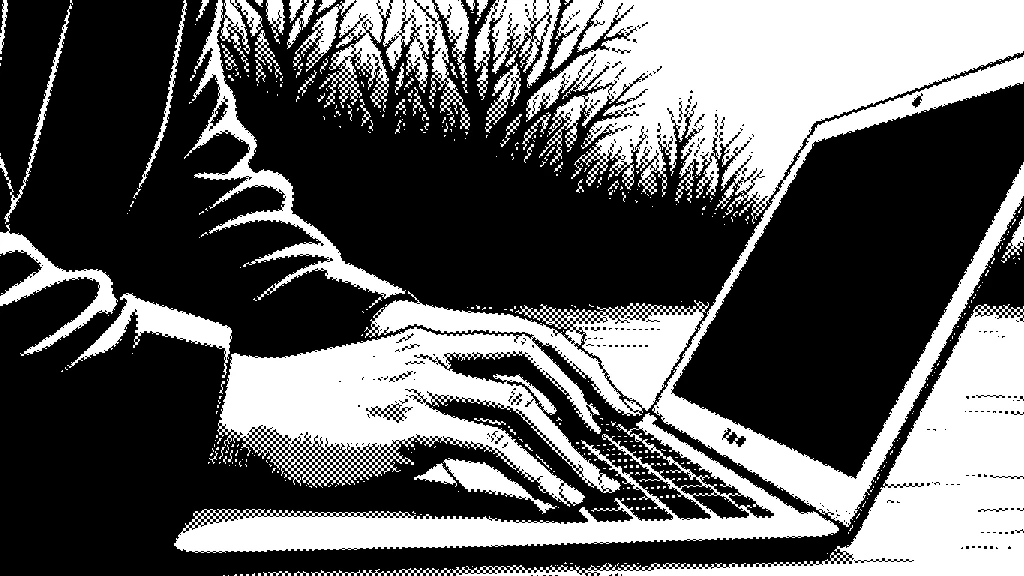
TL;DR: AI residue embarrasses people because it reveals more than tool use. It shows where the maker stopped choosing, accepted the smooth sentence or plausible image, and hoped the audience would mistake completion for contact.
You can hear the paste line.
The paragraph above it has a limp, a bad knee, something human in the gait. Then the floor turns polished. Every sentence knows where to stand.
The nouns wear little office badges and the ending explains the feeling you had already managed to feel without assistance.
I read everything out loud, because I spent twenty years on a live mic with no undo button and you cannot catch this defect any other way. On the page the polished paragraph looks better than the limping one. In the mouth it goes dead.
There is nowhere to breathe. Nothing is short. Nothing is quiet, so nothing gets to be loud.
That is not a style problem. That is a compressed signal, and a compressed signal is louder on every meter and dead in every ear.
Ryan Broderick gave the discomfort a clean title in “No one wants to see the evidence of their own AI usage”. The title is enough to open the door. People use the machine, keep the result, and recoil when its fingerprints remain visible.
The residue makes authorship look thinner than the claim
Visible AI use feels embarrassing when the residue makes authorship look thinner than the claim attached to the finished work.
The stain appears where judgment should have been. A support tool can check a fact, expose a missing case, or offer ten bad options that force the maker to find an eleventh. Nobody flinches at the screwdriver lying beside the radio. The flinch comes when the screwdriver is singing the station ID and the operator has signed the log.
Shame also thrives in foggy rules. Workplaces praise AI adoption and punish evidence of dependence. Schools issue conflicting policies.
Creative markets sell automation as liberation, then use “human-made” as a premium label. People learn the practical response: take the speed, wipe the counter.
That secrecy preserves no useful standard. It leaves the audience guessing and the maker unable to name which decisions remain theirs.
Passive use costs ownership, ability, and meaning
Passive AI use can reduce a person’s sense of ownership, independent ability, and meaning in the task even when they like the immediate result.
A 2026 Scientific Reports study compared different ways of working with generative AI. Participants who copied AI output reported lower self-efficacy, less psychological ownership, and less meaning than people who completed the work themselves. They also enjoyed the process and liked the outcome.
There is the little electrical horror.
Satisfaction can rise while the maker disappears. The result looks competent. The task hurts less. Somewhere behind the ribs, the person knows they cannot point to the sentence where the work became theirs.
The same study found a better pattern. Participants who drafted first and used AI to edit did not show the same psychological costs. Their attitudes resembled those of people who worked without AI.
Sequence changed the relationship. A person entered the room before the machine rearranged the furniture.
The finding does not turn drafting order into holy law. It gives us a useful bodily test: can you identify the choices you made, the suggestion you refused, the line you changed because the model’s version was polished and false?
How can a creator use AI without losing the pulse?
A creator keeps the pulse by entering with a position, making the consequential choices, and treating generated material as suspect until it survives contact with intention.
Begin with something the machine did not supply: the scene, the bruise, the claim that costs social comfort, the specific reader whose face interrupts a cheap sentence. Then use the tool against the work. Ask for the contradiction.
Ask where the argument cheats. Ask which fact would collapse the whole arrangement if it came back wrong.
Keep a refusal in the process. The accepted suggestions tell you what the tool can do. The rejected one proves somebody was home.
Disclosure should name the consequential assistance in plain language. “AI was used” tells the reader almost nothing. “A model generated the first draft” and “a model checked the code examples after I wrote them” describe different claims of authorship.
Most creative work will pass through mixed processes. Cameras calculate exposure. Software corrects pitch.
Editors cut the darling sentence and leave the author glaring at the wall. The question has always been where the human judgment lives and whether the byline tells the truth about it.
What evidence of AI use should remain visible?
The useful evidence is a record of method: what the tool handled, what the maker verified, and which decisions stayed human.
Keep prompts when provenance matters. Keep source links. Keep the ugly first paragraph if it contains the original claim.
A change log can show where a generated answer failed without turning the final piece into a glass museum case.
Process evidence protects the maker from their own convenient memory. A week later, the smooth phrase feels self-authored. A month later, the unverified number has acquired childhood photographs.
The residue people fear is often cosmetic: a phrase, a metadata crumb, the sudden voice of an airport business book. The dangerous residue is invisible. It sits in an assertion nobody checked because the paragraph arrived wearing a tie.
The cursor blinks after the clean sentence. The room has gone silent enough to hear who is missing.
Frequently asked questions
Does using AI mean a person did not create the work?
No. Authorship depends on the actual process, including who formed the position, selected material, verified claims, and made consequential decisions. Tool use alone does not answer those questions.
Why should a creator disclose AI assistance?
Disclosure lets readers assess provenance and the scope of the human claim. Specific disclosure is more useful than a generic label.
What is a safer way to use AI for writing?
Draft the position and key material first, then use AI for critique, alternatives, or editing. Verify factual claims and keep final judgment with the named author.
The longer field manual for where the machine earns its keep in a draft and where it should never touch a sentence: Writing With the Machine: Using AI Without Sounding Like Everyone Else.
Comments are open to members. Sign up free →