The Small Web Had a Very Small Civil War
/In 2020 two visions of the Small Web collided with years of IndieWeb work and a charge of digital greenwashing. The escape route came with its own brand.
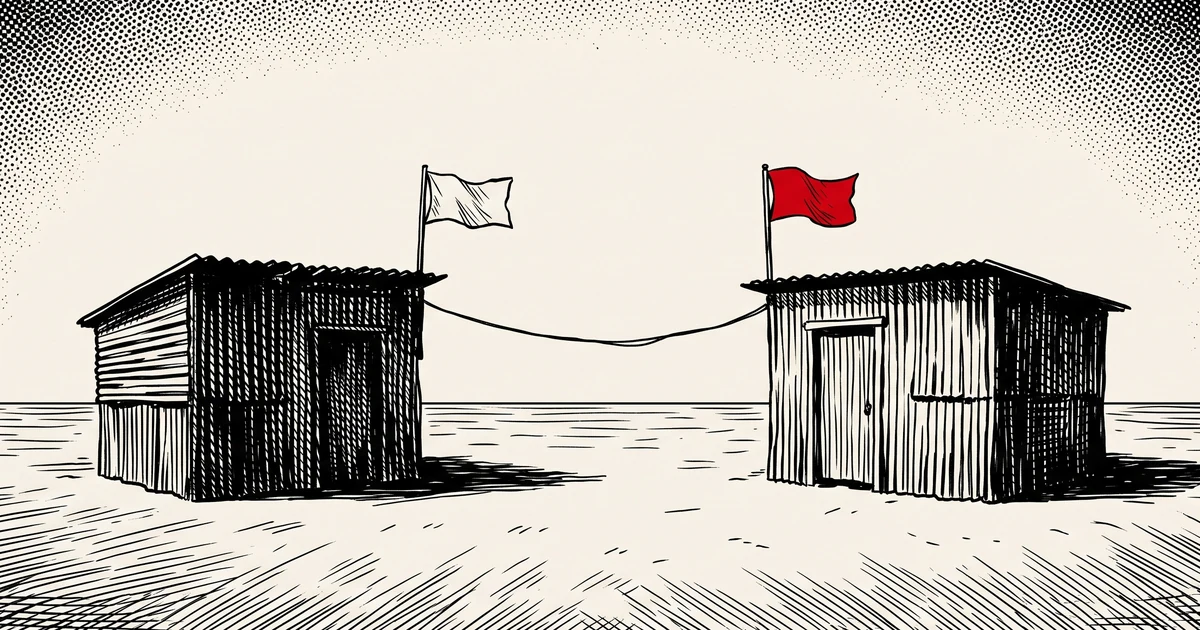
TL;DR: Two men used the phrase Small Web three months apart in 2020 and meant different machinery by it. The people who had spent a decade building the nearby thing under an older name took it badly, and the argument that followed was about credit, funding, and who inherits the audience.
The independent web has at least six names for leaving everybody alone. I’ve been operating under three of them and I’ve never signed a thing.
Small Web. Smol Web. IndieWeb. Personal web. Slow web. Gemini. Digital gardens. Neocities. Handmade pages. The labels overlap without agreeing, like cats sharing one patch of sun and denying the others exist.
This month I’ve been copying DNS records off a control panel I’m about to cancel and typing them into a box whose root password lives in my head. Nobody in that process has asked me which movement I’m joining, because the invoice doesn’t have a line for movements.
In 2020 the phrase “Small Web” got dragged into a naming war so small it barely showed up outside a wiki. Everybody in it had the same enemy, because the public internet had collapsed into a handful of corporate feeds ringed by websites begging those feeds for scraps. Beautiful arrangement if you own the feed. Horseshit from every other chair in the room.
Then the escape route got branding.
Satyal’s version was handmade pages and dead ends
Parimal Satyal published “Rediscovering the Small Web” on May 25, 2020. Hobby sites, personal obsessions, experiments, dead ends nobody bothered to redirect, pages built by people who weren’t measuring anything on the way out.
The appeal was tactile. Search had gotten too good at handing back Pinterest and Quora and whatever content farm bought the keyword that week, social platforms had flattened a person down into a profile and a posting history, and the small sites kept all the crooked construction choices that prove a human was in there with his hands.
Satyal’s essay didn’t announce a protocol or sell a platform. It pointed at a surviving part of the web and told you to go look.
That modesty is why the phrase traveled so far so fast. Small Web sounded like a place you could walk into without signing a constitution at the door.
I’ve got the same reflex about my own stuff, which is why everything I build gets built so I can walk out of it later. Nothing in my footer names a movement.
Balkan’s version came with architecture
On August 7, Aral Balkan of the Small Technology Foundation published his own answer to “What is the Small Web?” His version ran political. Big Tech’s business model treats people as farmed resources, and the humane replacement he described required personal, single-tenant technology where each person controls a place of his own.
He was proposing plumbing. Human rights and ownership down at the layer where the bills get paid.
Satyal described a culture of independent sites. Balkan described a technical and ethical program for replacing surveillance-capitalist systems, and he had software and hosting attached to it. Trouble was, people had already spent years building the nearby thing and calling it IndieWeb.
The IndieWeb crowd had been at it for a decade
That community had working practices and working tools for publishing on your own domain, syndicating outward, receiving the responses back, and never once depending on a central platform to keep breathing. Its principles came out of meetups, wiki edits, and implementations that people ran in public.
A polished new label showed up wrapped around familiar values and some of those people saw erasure. A Hacker News commenter accused the Small Technology Foundation’s proposal of “digital green-washing.” The critique argued that renting servers and domains through a branded system didn’t deliver the independence the language promised, especially while the existing IndieWeb work went uncredited.
Balkan responded angrily. The IndieWeb wiki preserved the proposal and the criticism side by side, which is the most IndieWeb outcome available to man, and then the community made a page about its own fight and kept revising it.
The sticker is the whole fight. Whoever owns the phrase gets the next ten thousand people, the funding, the conference invitations, and the credit for a decade of unpaid work, which ain’t a small damn thing when you’re the one who did the decade. A movement with no memorable language can build the whole road and watch a fresher phrase drive down it.
Both sides were arguing at different altitudes
The handmade-site vision needed no approved stack and no permission from anybody. Balkan’s needed a codebase, a host, and an argument about power.
IndieWeb offered principles and composable techniques instead of one vertically integrated system, which is the harder sell and the more durable one. All three were right at their own layer and competing for the same people at the same time.
Those differences hold up. So does the shared ground: own your address, cut the corporate middleman out of the transaction, keep the human texture, and build tools that don’t have to eat surveillance to survive.
Crown one label and you rebuild a monoculture around the escape from monoculture. That’s how you end up with a movement that owns a logo, a foundation, a hosting bill, and the same goddamn landlord in a nicer hat.
I like the small web because it holds incompatible little kingdoms without a treaty. One runs hand-typed HTML that hasn’t been touched since Clinton. The next one over builds with a static site generator.
One is a garden of half-finished notes nobody’s gonna finish. One syndicates to everything. One refuses JavaScript on religious grounds and I respect the hell out of that guy.
The links between them don’t require anybody to convert, which is the same reason I’d rather ship the smallest ugly thing that works than wait on a grand unified system. I’ve done my time on rented ground, and the landlord always comes to collect in reach instead of dollars, which is worse, because at least you can budget for dollars.
Tonight I’m hauling directories off a managed host onto a machine I can put my hand on. Nobody’s asked me what to call it and I ain’t stopping to decide.
Sources
- IndieWeb wiki: Small Web and the 2020 dispute
- Parimal Satyal: Rediscovering the Small Web
- Aral Balkan: What is the Small Web?
- Hacker News discussion
Frequently asked questions
What is the Small Web?
The phrase carries several meanings. Most of the time it points at personal, human-scale websites and the tools that let a person operate outside the dominant platforms.
How is IndieWeb different?
IndieWeb is a long-running community organized around owning your domain and your data, then using interoperable tools to connect out to everybody else.
What did “digital green-washing” mean in this dispute?
The critic argued that a newly branded Small Web service repackaged existing independent-web ideas without handing over the degree of ownership its language implied.
Comments are open to members. Sign up free →