Ableton Found a Fire Exit Through Wine
/A community-patched Wine build runs Ableton Live 12 and Push 1/2 on Linux, and has already swapped its own audio backend once since this got reported. Unsupported by design, which is the whole appeal.
TL;DR: A community project patches Wine to run Ableton Live 12 on Linux with Push 1 and 2, VST3 interfaces, and its own PipeASIO bridge into PipeWire audio. An experimental Live 11 track carries Max for Live along with it. It looks close to native. It remains unsupported, which is where the smoke enters the booth.
At 2:17 in the morning the operating system should be beneath notice.
The kick lands. The bass answers. Push lights the room in small colored squares, and nobody wants a licensing strategy crawling out of the monitor between bars.
I have been on after midnight long enough to know what a dropout actually costs, and it is not the track. It is the room. Somebody out there is driving, or awake for a bad reason, and the sound is the only thing telling them the hour is still moving. Four seconds of nothing and they are alone in a car again. That is the number I judge this by. Not the feature list.
Peter Kirn reports for Create Digital Music that shibco’s unofficial project now gets Ableton Live 12 running on Linux through a patched Wine environment. The feature list reaches far beyond a screenshot of the application opening. Audio, hardware, plug-ins, reconnection, and display scaling have all entered the set.
Live 12 runs, across every edition
The project supports Ableton Live 12 across its Intro, Standard, Suite, Lite, and Trial editions plus beta builds, an experimental Live 11 track, Push 1 and 2, VST3 interfaces, native file dialogs, and low-latency audio through its own PipeASIO bridge into PipeWire. Max for Live rides along, but only on the Live 11 side of the house.
The important word is operation. Plenty of compatibility projects can open a window and pose for the photograph. A music machine has to keep time while devices disconnect, plug-in editors redraw, MIDI arrives, and audio crosses the room with latency low enough that a drummer does not begin planning your death.
The audio route has already changed once since this got written up. WineASIO into JACK was the original path. The project has since built its own PipeASIO bridge straight into PipeWire and retired the old one mid-stream.
Device recovery still lets audio and MIDI gear reconnect during a session. VST3 plug-ins drop into the Wine prefix as bundles, and their editor windows render and take input without the redraw rot that used to mark a compatibility layer as a toy.
HiDPI scaling recalibrates without turning a control surface into a postage stamp.
Push 3 appeared in the article’s opening claim, and CDM’s own feature list carried it too, qualified as highly speculative and experimental. The repository files it under “coming soon” instead, the same drawer where every unshipped feature waits, alongside Move. Anyone building around the project should check the current repository and their exact hardware before turning a working studio inside out.
Wine translates, it does not emulate
Wine runs Windows applications through a compatibility layer rather than emulating a complete Windows machine.
That distinction can sound like a bumper sticker until audio has to arrive on time. Removing the weight of a full virtual machine gives demanding software a better chance to behave as though Linux belonged on the original support chart.
Compatibility becomes credible when the boring parts survive. File pickers. Theme detection. USB recovery. An Arturia interface opening at the correct scale instead of becoming a postage stamp with knobs.
The project patches Wine and supplies installation management rather than modifying Ableton’s binaries. A legitimate Live license and paid plug-ins can still be used. Reproducible builds make the compatibility layer easier to inspect and recreate, an unglamorous virtue that keeps a studio from depending on one mysterious zip file hosted behind a skull avatar.
Gaming proved that patched Wine variants can carry demanding commercial software. Music production has lagged because timing, hardware, copy protection, and plug-in formats create a nastier knot. This project has begun picking at the knot with tools instead of forum prayers.
Is this ready for a working studio?
It is ready for testing on a noncritical machine, while a paid session still belongs on a supported setup until the exact workflow survives repeated use.
Unofficial means the failure lands on the operator. Ableton owes no fix when an update breaks the prefix. A plug-in vendor can shrug at a crash.
The community project moves fast enough to prove its own point. In the weeks since this got reported, it swapped WineASIO for a PipeASIO bridge it built from scratch, folded Ableton Link into the base installer, and kept shipping new builds days apart, including one today. A project running at that clip can just as easily go quiet for six months, or fork, or vanish.
A studio migration needs a rollback song on the cart. Clone the working environment. Keep project files portable. Test every irreplaceable plug-in, controller, audio interface, and export path.
Pull the network if the experiment starts downloading the world ten minutes before a deadline.
There is still value in the test. Old hardware can return to service under Linux. Producers can examine an exit from operating systems that keep adding surveillance, account requirements, and decorative machinery nobody asked to hear.
The house sells the same instinct in smaller form: cheap tools you download once and actually own, no subscription waiting to shut the door behind you. Owning the exit instead of renting one is the same argument, one studio and one platform apart.
What changes if Ableton never supports Linux officially?
An unofficial route still gives musicians bargaining power by proving the application can run outside its sanctioned operating systems.
Proof changes the conversation. Developers can study actual failures instead of arguing from theory. Users can decide whether the remaining friction costs less than the platform dependence they already carry.
Other audio companies can see a market with working drivers, PipeWire, commercial tools, and people stubborn enough to patch the door themselves.
A fire exit does not need to become the front entrance to matter. It needs to open when the room gets hot.
The build is running somewhere tonight on a discarded tower with one fan bearing gone bad. Live draws its clean gray grid. PipeWire holds.
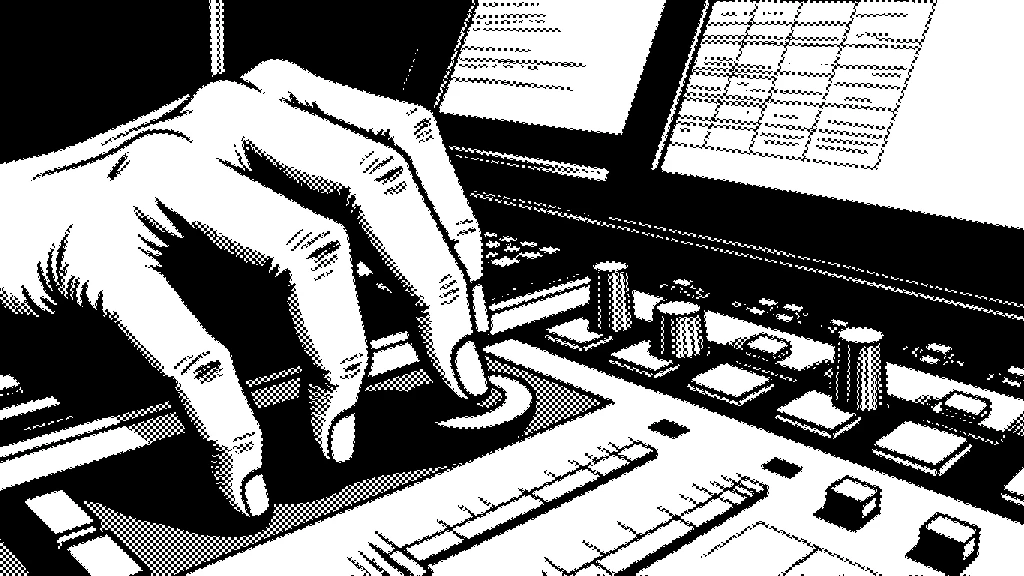
A Push waits under one hand while the other reaches for the fader, and the operating system finally shuts up.
Frequently asked questions
Does Ableton officially support Linux?
No. This is a community compatibility project built around patched Wine. Ableton and plug-in vendors may decline support for problems that occur in the setup.
Which Push controllers work with the Linux project?
Push 1 and Push 2 work today. The project’s own roadmap lists Push 3 and Move as “coming soon” rather than shipped, so confirm current status in the repository before planning a migration around either one.
Can paid Ableton and VST licenses be used through Wine?
The project runs the Windows software through Wine without patching Ableton binaries, so legitimate licenses can be used. Individual authorization systems and plug-ins still require testing.
Comments are open to members. Sign up free →