Your Competition Is You: How to Stop Comparing Your Work to Everyone Else's
/Comparison kills more creative work than rejection ever will. A practical way to stop measuring yourself against strangers and ship the thing instead.
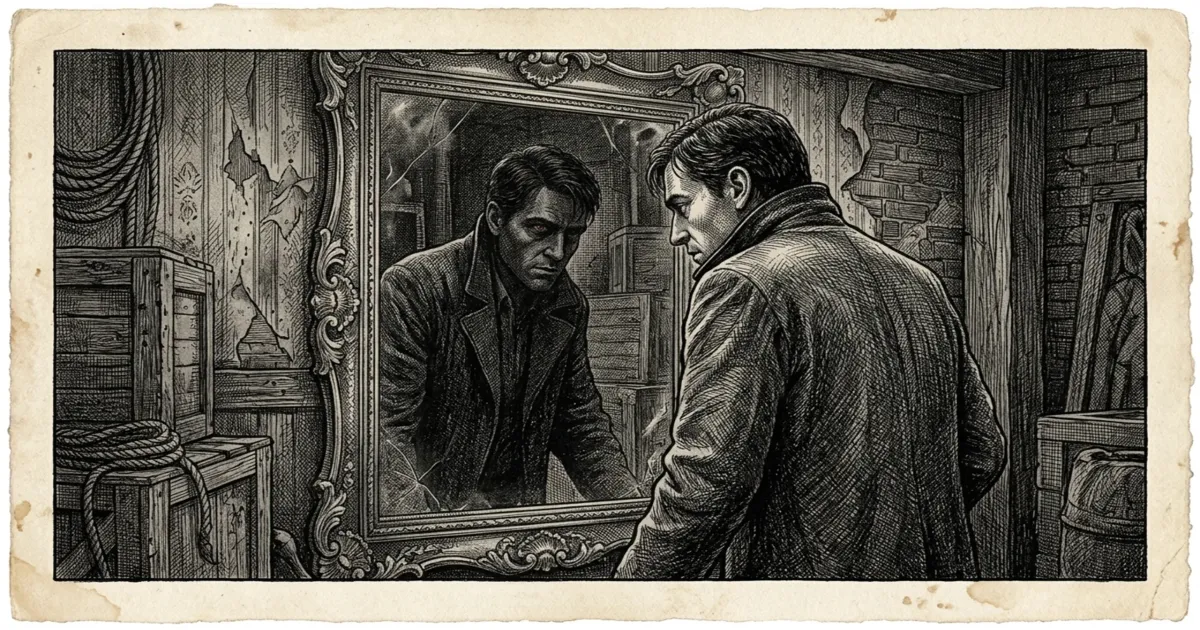
TL;DR: The person beating you isn’t the writer with the bigger numbers. It’s the part of you that opens their feed, decides you’ve already lost, and closes the laptop. Comparison is the tax you pay for a metric you can’t even see clearly.
You scroll past someone doing the thing you want to do. They’ve got the audience, the deal, the numbers. And the worst part is you know you could do it. Maybe better. So why are they up there and you down here.
Then it curdles. The whole thing looks rigged. You close the file, go back to the job that drains you, and sit in it.
That writer you’re measuring against has no idea you exist. They’re heads-down on their own mess, not racing you. The only person clocking your splits is you, and you’re using a stopwatch you built out of someone else’s life.
Comparison matches your inside against someone else’s outside
Comparison fails because you’re matching your inside against someone else’s outside. You see their published post. You don’t see the eleven drafts, the dead years, the stuff they buried.
Social platforms make this worse than it was in 2024. The feed is tuned to surface the top fraction of a percent, the breakout that hit, and bury everything ordinary. By 2026 you’re comparing yourself to an algorithm’s highlight reel, not even to other people, sometimes against work a model generated in nine seconds.
- The metric you envy is partial. Follower counts don’t show churn, burnout, or the day-job they still keep.
- The metric you envy is late. You’re seeing the result of a decision they made years ago.
- You’re measuring against someone else’s scoreboard, built for their life, their lane, their tolerance for grind. Nothing on it says anything about yours.
Judge your output by a number built for someone else and you’ll always come up short. That’s a measurement error you keep repeating, not failure.
Study the method, not the scoreboard
Watch the people ahead of you, but study the method, not the scoreboard. The number is the part you can’t copy. The how is the part you can.
Find three or four people doing roughly what you want to do. Don’t stalk the metrics. Take apart the work.
- How do they open. Where do they put the turn. What do they cut.
- How often do they ship, and what does their bad work look like, because they have bad work too.
- What did their stuff look like three years ago. Go dig it up. It was rough. That’s the point.
Say so out loud, too. Tell them the post landed. Share it. The creators worth learning from notice who shows up, and a feed full of people you’re rooting for hits different than a feed full of people you resent. Same posts. Different nervous system reading them.
What do you do when you’re discouraged and broke?
Run the problem through one filter before you let it eat the afternoon. My father gave it to me and it still holds: can you change this right now?
If no, it’s not yours to carry today. Put it down. Worry about it changes nothing about it.
If yes, then you already know the move. Stop narrating the problem and go make the change.
Most of what flattens a working writer isn’t a real wall. It’s the meeting you keep holding with yourself about the wall. The rent is real. The doubt about the rent is a story, and the story is optional.
You go through it
You go through it. When I was in the Air Force, somebody would tell me a task was impossible about once a week. I’d tell them the same thing every time. If you can’t go around it, over it, or under it, you’ve got one option left. Through.
A problem doesn’t soften because you’re sad about it. It doesn’t read your mood. It sits there, exactly as big as it was, until you walk up and put your hands on it.
That’s the whole trick, and it’s an ugly one. No reframe makes the work smaller. You engage it or you don’t. The discouragement is weather. The work is the road.
How do you quiet the voice that says you’re not good enough?
You don’t kill that voice. You out-vote it. The doubt is wired in. We’re pack animals, built to scan for whether the group still wants us, and that wiring doesn’t care that you’re trying to finish a chapter. It’ll flag you as not-enough on a perfectly good day.
There’s a second voice under it. Quieter. The one that already knows you can do the thing, that wrote the line you were secretly proud of last week. Most people let the loud one run the meeting.
Turn the other one up. Hand it the gavel. Let it tell the loud voice to sit down. Not because you’ve conquered the doubt. Because you’ve got pages due and no room on the calendar for a pity party that produces nothing.
The competition was never the writer with the better numbers. It’s the version of you that already decided how this ends.
Frequently asked questions
Isn’t some competition healthy?
External competition can sharpen you when it’s a sparring partner, not a judge. The line is whether watching someone’s work sends you back to your own desk or away from it. If their win makes you build, keep watching. If it makes you quit, you’ve turned a peer into a mirror, and the mirror lies.
How do I stop comparing my numbers to other creators?
Stop looking at the numbers and start looking at the moves. Metrics are downstream of decisions you can’t see and conditions you don’t share. Reverse-engineer how someone structures a piece or builds a habit. That’s transferable. Their follower count is not.
What if comparison is the only thing motivating me to write?
Then it’s a loan with brutal interest. Comparison-fuel burns hot and leaves you hollow, because there’s always someone bigger and the goalpost never stops moving. Trade it for something slower. Curiosity about the craft, a question you actually want to answer. That tank doesn’t run dry the second someone passes you.
If the comparison habit is the thing eating your attention, The Minimalist Creator’s Handbook goes at it directly.
Comments are open to members. Sign up free →