Six Hands Are in Your Cart and Two of Them Are Mine
/Cialdini's six principles run every sales page you touch. I sell things too, so I run some of them on you. The line is whether the signal is true.
TL;DR: Cialdini’s original six are decision shortcuts, and they run hardest on people who are tired, broke, or short on time. I sell things on the internet, so I run some of them on my own readers. The line is whether the signal underneath is true.
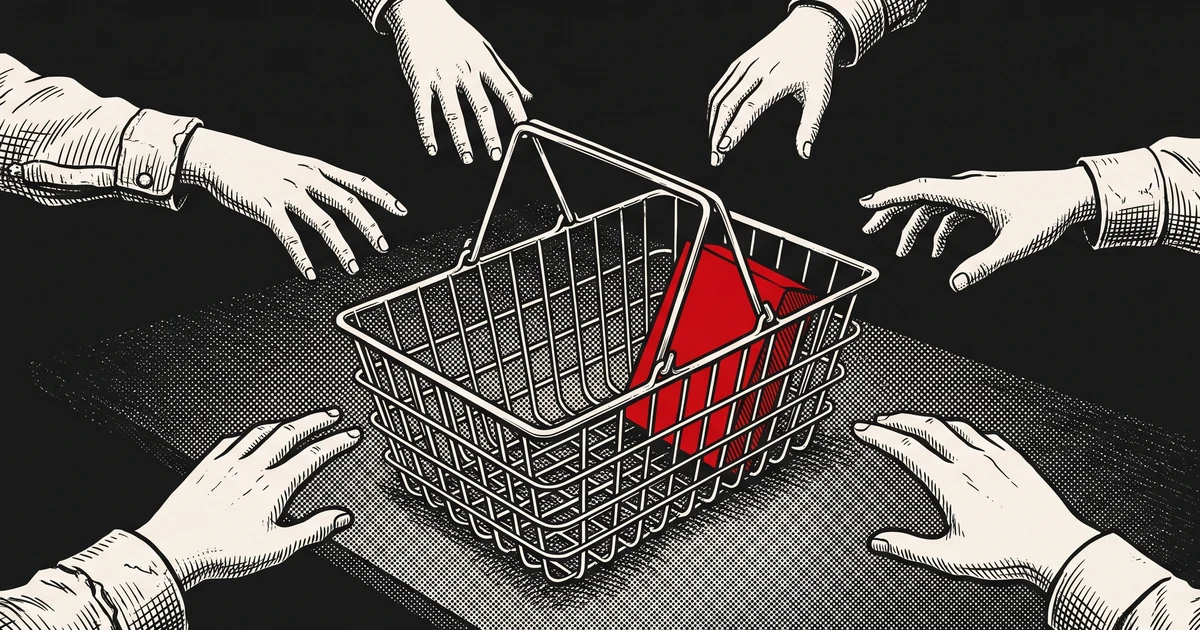
Six hands were in your cart before you reached for the card, and I know the grip of two of them, because they’re mine. Learning that about myself went down harder than learning it about the guy running the countdown timer.
Robert Cialdini spent years watching people move from hesitation to yes. The original edition of Influence named six recurring mechanisms: reciprocity, commitment and consistency, social proof, liking, authority, and scarcity. A later edition adds Unity.
The old six run half the internet before breakfast. They get strong when attention or time or knowledge runs thin, which on the internet is most of the day.
Six levers a tired brain reaches for
Reciprocity leaves a gift lying there unfinished until something goes back the other way. Commitment keeps a man behaving like the man he already said he was.
You didn’t have time to do the research, so social proof lets the crowd do it for you. Liking drops the guard.
Authority hands over borrowed certainty. Scarcity raises the price of anything about to walk out the door.
They stack, and I know they stack because I stacked them. Every guide I’ve written is free to read on the site. You want the PDF, you hand over an email address, and that address lands on a list I own instead of a platform’s.
That’s reciprocity with a turnstile bolted to it. I bolted it on myself. I’d do it again tomorrow.
The trade holds up because the free version is the whole guide, nothing truncated, no chapter held back so you’ll buy the real one. It’s the same lever a $2,000 course pulls on you at midnight, though, and I ain’t gonna pretend otherwise.
The timer beside the checkout button
Fifty copies of a physical edition. A cohort that opens Tuesday. Those deadlines are real, and a man saying so out loud is doing his job.
Then there’s the timer that resets when the browser does, the one somebody paid a developer to build and test and ship, a small electronic liar that clocks in every evening, and that piece of shit works the graveyard shift on people who are tired and short on rent and one bad month from something worse. That one’s a con.
Authority arrives as credentials, media logos, a uniform, jargon, and a voice that never wavers. Social proof arrives as review counts, sales counters, waitlists, and a row of grinning people who apparently rebuilt their whole lives against the same exposed-brick wall.
Liking is why a seller spends three paragraphs on his dog before he mentions the software. Commitment is the quiz that walks you through six yeses before it names a price. Reciprocity is the free workshop that closes on an offer big enough to make the free part feel like a down payment you already handed over.
None of that proves anybody is lying to you. Read the page twice anyway.
Running all six without lying to anybody
Use what’s already true in the operation. That’s the whole method and it fits on an index card.
Give something useful before you ask for anything. Print real buyer comments with permission.
Say why your experience is relevant without inflating the title you held. Set a limit only when inventory or time or access is limited for real. Let the customer walk out, and hold the door for him.
I get told, over and over, by people who have never met my readers, that pricing my work at a few bucks means folks will assume it’s garbage. That’s a scarcity argument wearing a business-school jacket, and it’s horseshit.
My people are the waitress and the construction worker and that retail kid whose mom works the factory line, and they can’t afford a course whose main product is another goddamn course. So I sell the smallest thing that sells and I sleep fine.
Consistency helps a buyer finish something he already wanted. It turns coercive the second a seller takes that small public yes and drags him with it into a purchase he never asked about.
Authority cuts a buyer’s research cost, right up until the costume shows up without the competence underneath it, and then it’s fraud.
The test I run on my own pages: does the influence leave the buyer understanding more than he did before he got here? If the sale needs confusion, or shame, or a clock that lies, you’ve quit using the principle and started swinging it.
The list keeps working after you memorize it
You cannot inspect the factory, test every claim, interview every prior buyer, and reproduce a stranger’s twenty years of training before you buy a bar of soap, so you hand out trust fast and cheap and on bad information with a dozen other things left to do before dark. Cialdini’s six describe some of the signals people grab on the way past.
Learning the list buys you a pause. The crowded restaurant might be good, or the line out front might be the staff on break.
Maybe the limited edition matters. The expert might know the field, or he might own one good jacket and a photographer.
The pause is the whole win. Nobody gets to be immune, and any man selling you immunity is running liking and authority on you while he says it.
I built the button that trades a free PDF for an email address, and I left it sitting right there on the page.
Sources
- Influence at Work: Cialdini’s principles of persuasion
- Harvard Business Review interview: The original six principles
Frequently asked questions
What are Cialdini’s original six principles?
Reciprocity, commitment and consistency, social proof, liking, authority, and scarcity, in the order he presented them.
Why do some lists contain seven principles?
Cialdini added Unity in the expanded edition of Influence. Unity concerns shared identity, the sense that the person across the table is one of us.
Are persuasion principles unethical?
Depends entirely on the hand holding them. Truthful signals help a buyer decide faster. Fabricated scarcity, false authority, and manufactured social proof deceive him.
As an Amazon Associate I earn from qualifying purchases. These are affiliate links, same price to you, and it helps keep the lights on.
Comments are open to members. Sign up free →