Twenty-One Prepper Files Found Every Crack in My Business
/Food rotation, bug-out bags, and redundant water each have a twin inside a one-person shop. Twenty-one prepper files showed me which of mine was leaking.
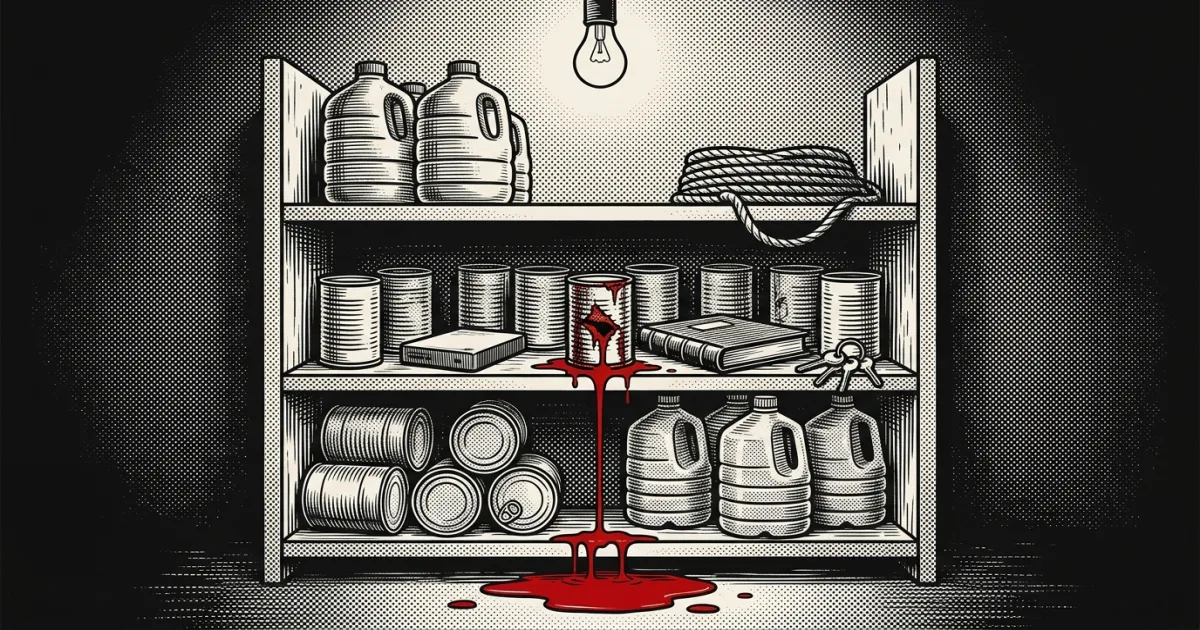
TL;DR: A one-person shop needs stock it can rotate, water in more than one container, a kit it can carry out the door, and a written triage order for the week the operator goes down. The survival shelf worked all four out decades ago, back when the worst case was a blizzard instead of a suspended account.
I opened the folder expecting beans and ammunition.
Twenty-one files. Food storage, medicine, livestock, foraging, winter survival, bug-out planning, retreats, and a whole subgenre of weekend projects for the man who suspects electricity has gotten overconfident.
By the third file I’d quit thinking about beans. I was thinking about a subscriber list that lives inside one company’s database, and a storefront that lives inside another one, and a domain that lives inside a third, and how not one of those companies has ever given a shit how my week was going.
The continuity plan for this whole operation is a 10-pill-a-day veteran with a bad week coming eventually. If I go down nothing catches the queue, nobody rotates the stock, and the rent on all that rented land comes due anyway.
That stack taught me more about staying in business than any book with a smiling bastard pointing at a hockey-stick chart. So I read all twenty-one.
Your content shelf has expiration dates
Cans have dates stamped on the bottom. So does a draft about a tool that got acquired in March.
A prepper who buys a thousand cans, stacks them in a wet garage, and calls the problem solved is going to open a rusted lid in year three and learn something about himself. Food carries dates, conditions, calories, prep requirements, and a rotation order.
Eat the oldest. Replace what leaves. Store what the house will sit down and eat.
Content works the same. Inventory means sourced cards at known stages: research ready, draft ready, waiting on art, publishable, evergreen, seasonal.
Old material gets rotated forward before the facts spoil on it. A piece I wrote about pricing eighteen months ago holds up fine. A piece about a platform’s terms of service has the shelf life of milk.
The point is continuity. One bad week shouldn’t blow the schedule or force some desperate article built out of vapor and a Wikipedia tab, and the cure for that is having the smallest finished thing already on the shelf where you can reach it without thinking.
One crack in the bucket and the water’s gone
A survival guide splits the water across containers because one crack shouldn’t end the household. Then you look at a creator whose entire audience lives inside one social account, and there it is.
All the water. Somebody else’s bucket, somebody else’s garage.
Single points of failure sit wherever one password, one vendor, one domain, one person, or one platform can stop the operation cold. So export the mailing list and back up the site. Know which services swap out in an afternoon and which ones hold data you can’t recreate at any price.
Keep local source files. Write down the publishing path so a stranger could follow it. Rent the reach, own the readers, and keep more than one road open to the people who pay you.
Redundancy looks like waste right up until the first failure, when it changes its name to supply.
Because the account gets flagged by a machine at three in the morning for a reason no human being will ever explain to you, and the appeal form goes to an inbox nobody reads, and your whole audience sits behind a login you no longer have, and there is not one goddamn lever left to pull. That’s the fee hike and the algorithm change and the landlord, all at once.
The bag is the part you can carry out
Domain credentials, recent site backups, subscriber exports. Product masters, sales records, licenses, brand assets, the handful of procedures that only exist because you do them every week, and a plain-text list of the next actions.
Secrets stay locked. Their locations and their recovery process can’t live only in your head, because your head is the thing that fails first in a bad month.
A bug-out bag buys mobility and nothing else. The business version should let you restore a basic storefront, reach the audience, and fulfill what people already paid for, without rebuilding the whole empire in the middle of the emergency.
That’s the standard, built so you can leave. Then you practice it, because restoring a backup to a scratch folder on a slow Tuesday is the only way to find out whether the thing comes back at all.
An untested backup is a religious object.
Triage when the only medic is you
Prepper medicine starts from the assumption that help is delayed. Solo operators have the same staffing problem with better lighting.
When the operator gets sick, or loses the income, or gets the phone call about somebody in the family, nobody else absorbs the queue. That ain’t pessimism. That’s the org chart.
Triage means naming what protects life, trust, and cash flow before you need to know. Fulfill paid orders. Tell people about delays in plain language.
Preserve the site and the customer records. Pause optional production. Let the vanity metrics bleed out on the floor where they landed.
Write the recovery order while the room is calm. Crisis makes simple tasks expensive and complex tasks imaginary.
Preparedness has an image problem because the loudest version of it wants the collapse to show up and justify the shopping. The useful version is boring as hell.
Label the container. Rotate the stock. Test the radio and know the road out.
Those same habits keep a small shop breathing when the disaster turns out to be a deprecated endpoint buried in a changelog nobody read, on a Sunday, with the checkout page handing every buyer a 500 and not one soul awake to see it happen.
I opened the folder again and went straight to the chapter on water.
Sources
- Joe Forrest’s local 21-file prepper and survival collection
- FEMA: Ready Business resources
- CISA: Back up business data
Frequently asked questions
What is content inventory?
A maintained reserve of sourced ideas, drafts, and images held at known production stages, with a rotation date on anything perishable.
What should a creator back up first?
Customer and subscriber records, product masters, site content, domain and account recovery details, financial history, and the written procedure for putting all of it back.
Why export data from platforms?
Accounts get suspended, features get killed, companies fold, access gets throttled. A current export shrinks how much of the business sits behind one login.
Comments are open to members. Sign up free →