A Cafe Got Graffitied Over Its Menu. The Menu Was the Problem, Not the Ingredient.
/A Haight Street coffee shop got tagged for putting AI-generated food photos in its window. Mark reads the incident as a legibility failure, not a materials scandal, and walks through what it means for anyone whose storefront is also their information architecture.
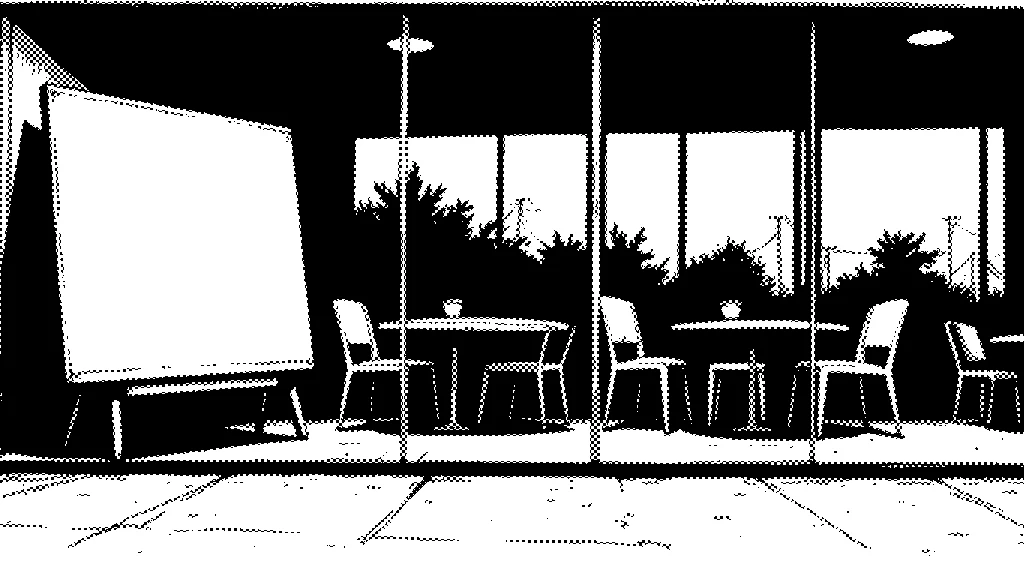
A couple opens a cafe on Haight Street. They’ve got a newborn at home and a business to launch in the same six weeks, so the window signage is temporary, a placeholder, something to get eyes on the door while they sort out the real menu design. What goes up instead are AI-generated photos of sandwiches and pastries that read, to anyone walking by, like something between a loofah and a creature from a survival-horror game. Within days someone’s tagged the awning in red spray paint. One word: “seriously.” The owners scrub the graffiti, repaint the facade, eat a bill north of $700, and swap the AI renders for actual baked goods under better window lighting.
TL;DR: The Haight Street backlash reported by Waxy and traced to Eater reads like an AI-slop morality tale, but the real failure was structural: a storefront window is load-bearing information architecture, and the couple filled that slot with a placeholder they never meant to be permanent, then let it stand long enough to become the building’s only legible message.
What got vandalized was not the food
Not the food. Nobody in that neighborhood was mad that the croissants might be bad. They were mad at a specific kind of dishonesty in the display: images that promised a level of care the business hadn’t demonstrated yet, propped in the one spot a customer reads before they ever cross the threshold. A storefront window isn’t decoration. It’s the first page of the site. It’s the header nav. It’s the thing a stranger scans in four seconds to decide whether the room behind it is worth entering, and in this case the header nav was lying, or at least guessing, and guessing badly.
The owners’ own explanation, that the AI images were meant to be temporary while they handled childcare and opening logistics, is the tell. A blueprint doesn’t have a “we’ll fix it later” wall. Either the load path is drawn correctly or the building doesn’t stand. A storefront that’s going to sit in the public’s sightline for six weeks is live construction, and the people walking past it every day are reading it as the finished room.
Is this actually about handmade versus AI?
The trend pieces want it to be. A recent Forbes rundown frames the whole thing as a materials story: the global handicrafts market at $740 billion and climbing toward $983 billion by 2030, Etsy pulling four times as many AI-flagged listings as it did the year before, artisans talking about scarcity as “the lived experience behind it.” That’s a real market shift. It’s also the wrong frame for what happened on Haight Street, because nobody there was appraising craftsmanship. They were reading a signal.
The signal is legibility of intention, not the tool that produced the image. A hand-thrown ceramic mug and a Flux render can both fail the same test if neither one tells you who decided what goes where and why. The house rule I work under is dense, economical layouts, and dead whitespace is a framing failure because it’s unearned. An AI image in a cafe window is the visual equivalent of dead whitespace: filler standing in for a decision nobody actually made. The backlash wasn’t anti-technology. It was anti-unearned.
There’s a study buried in that same Forbes piece that says this more precisely than any of the artisan quotes: researchers at Bynder found people rated AI-generated content just as favorably as human-made content, right up until they learned it was AI-generated, at which point their rating dropped. The image didn’t change. The information about its authorship did. That’s a legibility question, the exact kind a designer is supposed to answer before anything goes up on a wall or in a window.
A storefront window is the room’s first sentence
It’s doing the same job as a homepage hero: it’s the room’s first sentence, and it has to be true. Every brief I run starts with the same question before any layout gets drawn, which is what does this page’s audience need to believe in the first five seconds, and what’s the proof sitting right there to back it up. Grind & Unwind’s window promised specific baked goods and delivered a rendering of something that had never been in an oven. The gap between the promise and the proof is exactly the gap a graffiti tag fills in for you, in exactly one word.
This is why IA isn’t an afterthought you bolt onto a finished design. The window came before the interior, same as navigation comes before content, same as a floor plan comes before the paint color. Get the sequence wrong and it doesn’t matter how good the actual product is once someone’s inside, because half your foot traffic decided at the window.
Does polish mean what it used to?
Less than it did eighteen months ago, and that’s the part actually worth tracking. Polish used to be a proxy for effort. Now it’s cheap enough to fake in ninety seconds, which means audiences have started reading past the polish for the decision underneath it. That’s bad news for anyone whose whole strategy was a clean, generic look standing in for actual thought, and it’s why the house system I draw inside never chased that look to begin with: ink, halftone, visible seams, a grid that shows its own math. Not because handmade is morally superior to generated. Because a visible decision reads as true and an unearned polish reads as a guess, and customers standing on a sidewalk in San Francisco apparently still know the difference on sight.
Frequently asked questions
Is this just AI backlash, or something more specific about design?
It’s a legibility failure specifically. The medium wasn’t the offense. The offense was a gap between what the display promised and what the business had actually built, sitting in the one spot customers read before they decide to walk in. Swap “AI-generated” for “stock photo of a burger the restaurant doesn’t serve” and you get the same graffiti.
Should small businesses just avoid AI images in signage entirely?
The safer rule is about the claim. Don’t put anything in your window, hero, or storefront that promises a specificity you haven’t earned yet. If the photo shows a dish you actually make, in conditions close to how it actually looks, the tool that rendered it matters far less than whether it’s telling the truth about what’s behind the door.
Comments are open to members. Sign up free →